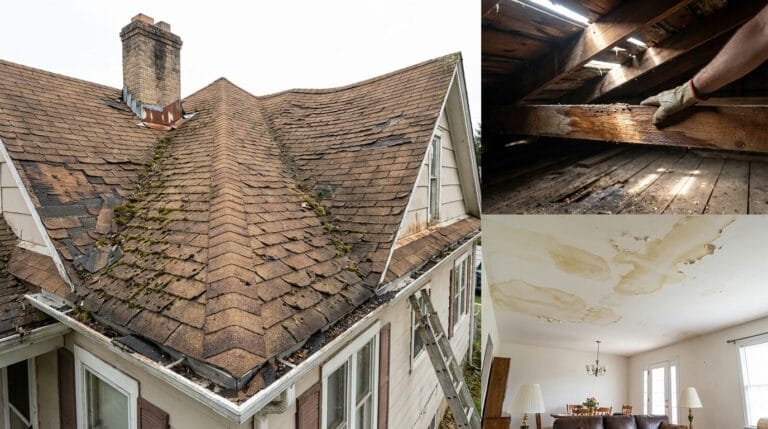

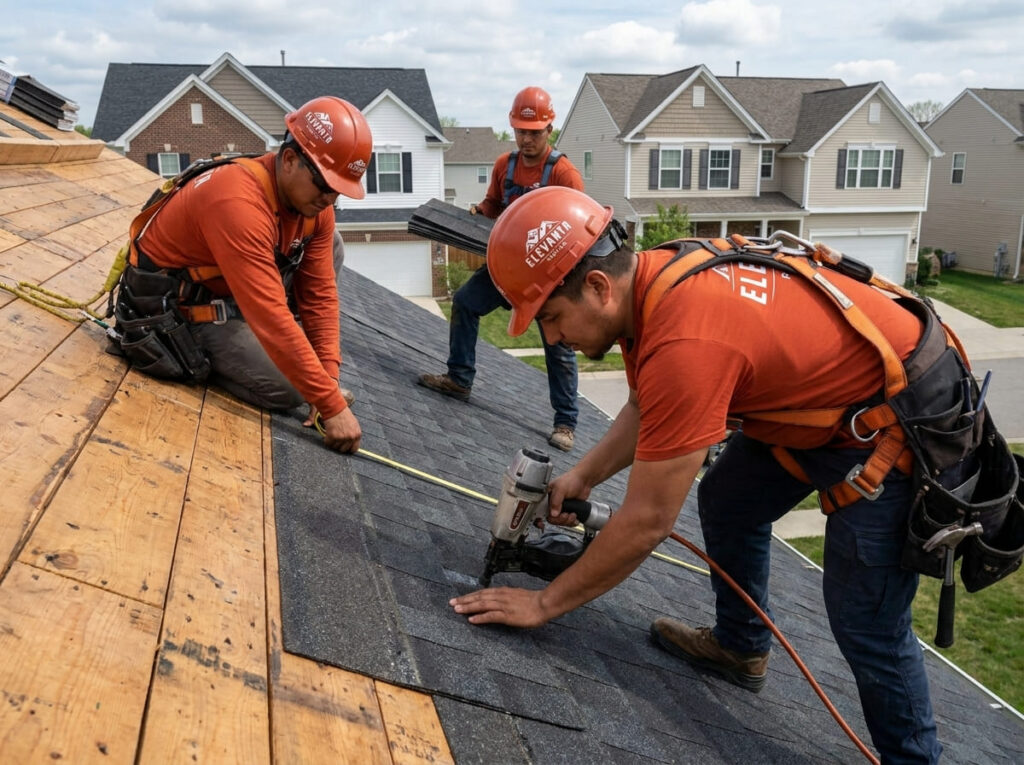
In 2026, the average roof replacement cost in the US ranges from $5,800 to $19,800, with most homeowners spending around $9,500 to $11,500 for a standard asphalt shingle roof on a 2,000 sq ft home. Your final cost depends on roof size, material type, labor rates in your area, roof pitch, and whether your decking needs repairs.
Replacing a roof is one of those home improvement projects that most homeowners dread, not because it’s complicated to understand, but because the price tag can feel overwhelming when you don’t know what to expect. You search online, get three different numbers from three different websites, and walk away more confused than when you started.
This guide is different. We’re going to break down every single factor that affects your roof replacement cost in 2026, materials, labor, location, insurance, financing, so that by the time you finish reading, you’ll know exactly what a fair price looks like, what to ask your contractor, and how to avoid paying more than you should.
What Is the Average Roof Replacement Cost in 2026?
Let’s start with the numbers you actually came here for.
Nationally, the average roof replacement cost in 2026 sits around $9,500 to $11,000 for a typical single-family home. But that “average” can be misleading because roofs vary so dramatically in size, shape, and material. A small ranch home in the Midwest with a simple gable roof and asphalt shingles might come in at $6,500. A two-story craftsman in the Pacific Northwest with a steep pitch, multiple dormers, and metal roofing could easily hit $35,000 or more.
Here’s a broad snapshot to set your expectations:
| Cost Tier | Price Range | What It Usually Means |
| Low end | $5,800 – $8,000 | Small roof, basic 3-tab asphalt shingles, simple pitch, low labor market |
| Average | $9,000 – $13,000 | Mid-size home, architectural shingles, standard complexity |
| High end | $15,000 – $30,000 | Large roof, premium materials, steep pitch, complex design |
| Premium | $30,000 – $70,000+ | Slate, copper, or clay tile on large or complex roofs |
The reason you’ll see such a wide range across websites is that roof replacement cost is genuinely not a one-size-fits-all number. It’s more like a formula: your roof’s square footage × material cost per square foot + labor + additional components + local market rates.
Once you understand each piece of that formula, the estimate you get from a contractor will actually make sense, and you’ll be able to tell immediately if someone is overcharging you.
Roof Replacement Cost by Roof Size
Of all the factors that affect your final bill, roof size is the most straightforward. Roofers price their work by the “square” one roofing square equals 100 square feet of roof surface area. So a 2,000 sq ft roof is 20 squares.
One thing that trips up a lot of homeowners: your roof’s square footage is almost always larger than your home’s floor plan. Why? Because the slope adds surface area. A 2,000 sq ft home might have 2,200 to 2,800 sq ft of actual roof surface depending on how steep and how complex the roofline is.
Here’s what you can generally expect to pay based on your roof’s square footage using standard architectural asphalt shingles:
| Roof Size (Sq Ft) | Estimated Cost (Low) | Estimated Cost (Average) | Estimated Cost (High) |
| 1,000 sq ft | $4,000 | $7,000 | $10,500 |
| 1,500 sq ft | $6,000 | $10,500 | $16,000 |
| 2,000 sq ft | $8,000 | $13,500 | $21,000 |
| 2,500 sq ft | $10,000 | $16,500 | $26,000 |
| 3,000 sq ft | $12,000 | $20,000 | $31,000 |
| 3,500 sq ft | $14,000 | $23,500 | $36,500 |
These ranges assume a full tear-off of the old roof, standard synthetic underlayment, and quality architectural shingles. Premium materials or a complex roof design will push you toward the high end, sometimes beyond it.
Roof Replacement Cost by Material (2026 Pricing)
Your choice of roofing material is the second biggest cost driver after roof size, and it’s also where you have the most control. Different materials come with dramatically different price points, lifespans, and long-term value. Here’s a complete breakdown of every major roofing material and what you’ll pay in 2026.
Asphalt Shingles
Asphalt shingles are the most popular roofing material in the US by a wide margin, and for good reason. They’re affordable, widely available, and easy for most contractors to install. They come in three main tiers:
3-Tab Asphalt Shingles: The most budget-friendly option. Flat and uniform in appearance, 3-tab shingles have a shorter lifespan and less wind resistance than architectural options. They’re becoming less common as more homeowners opt for the upgrade.
- Cost per square foot: $3.00 – $5.00
- Total cost (2,000 sq ft roof): $6,000 – $10,000
- Lifespan: 15 – 20 years
Architectural (Dimensional) Shingles: The most popular choice nationwide. Thicker and more dimensional than 3-tab, architectural shingles look better, last longer, and handle wind better. Most contractors include these in their standard quotes.
- Cost per square foot: $4.50 – $7.50
- Total cost (2,000 sq ft roof): $9,000 – $15,000
- Lifespan: 25 – 30 years
Premium Architectural Shingles: Designer-level asphalt shingles that mimic the look of slate, wood shake, or tile. They carry longer warranties and better performance ratings.
- Cost per square foot: $5.50 – $9.50
- Total cost (2,000 sq ft roof): $11,000 – $19,000
- Lifespan: 30 – 50 years
Class 4 Impact-Resistant Shingles: These are engineered specifically to withstand hail, up to 2 inches in diameter in some cases. They carry the highest impact rating available and are increasingly popular in hail-prone states like Texas, Colorado, Oklahoma, and Kansas. Many insurance carriers offer premium discounts of 10 to 30 percent when you install Class 4 shingles, which can offset the higher upfront cost within just a few years.
- Cost per square foot: $5.50 – $10.00
- Total cost (2,000 sq ft roof): $11,000 – $20,000
- Lifespan: 30 – 40 years
Metal Roofing
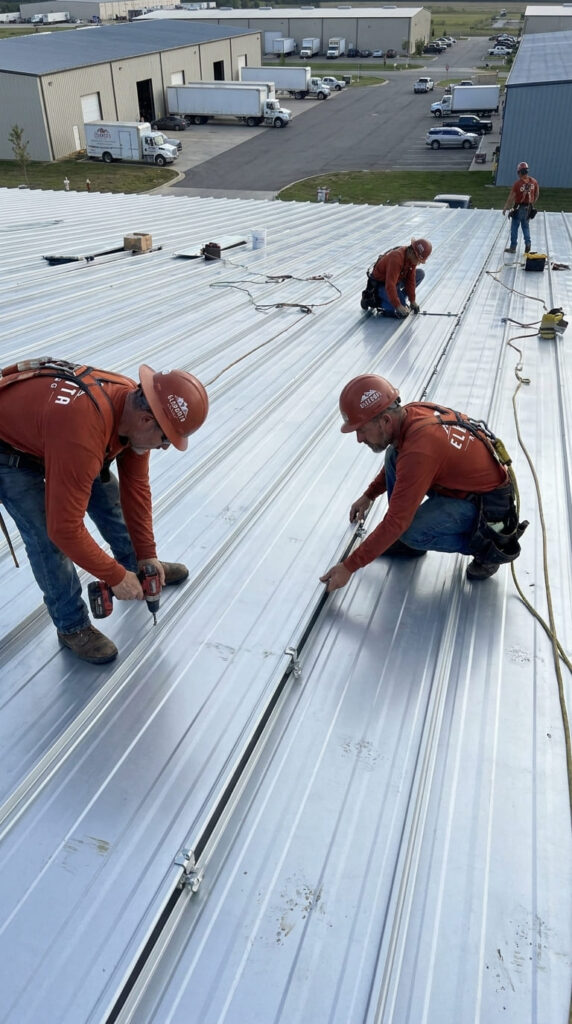
Metal roofing has grown significantly in popularity over the last decade, and it’s not hard to understand why. A metal roof can last two to three times as long as asphalt shingles, reflects solar heat to reduce cooling costs, and requires almost no maintenance. The trade-off is a higher upfront investment.
Corrugated Metal / Metal Panels: The most affordable metal option. Common on barns and agricultural buildings historically, but increasingly used on modern homes with an industrial or contemporary aesthetic.
- Cost per square foot: $5.50 – $10.00
- Total cost (2,000 sq ft roof): $11,000 – $20,000
- Lifespan: 40 – 60 years
Metal Shingles: Designed to look like traditional shingles or slate while delivering metal’s durability benefits. A good middle ground between appearance and performance.
- Cost per square foot: $7.00 – $13.00
- Total cost (2,000 sq ft roof): $14,000 – $26,000
- Lifespan: 40 – 70 years
Standing Seam Metal: The premium end of metal roofing. Hidden fasteners, continuous panels running from ridge to eave, and exceptional weather tightness make this the gold standard for metal roofs. It’s especially popular in the Southeast and Pacific Northwest where rain and wind are significant concerns.
- Cost per square foot: $10.00 – $20.00
- Total cost (2,000 sq ft roof): $20,000 – $40,000
- Lifespan: 50 – 75 years
Tile Roofing
Tile roofs are visually stunning and incredibly durable, but they come at a price, both financially and structurally. Tile is significantly heavier than asphalt or metal, and some homes require structural reinforcement before tile can be installed, which adds to the total cost.
Concrete Tile: More affordable than clay, and nearly as durable. Common in the Southwest and Southeast where the aesthetic fits the architecture.
- Cost per square foot: $7.00 – $14.00
- Total cost (2,000 sq ft roof): $14,000 – $28,000
- Lifespan: 40 – 60 years
Clay Tile: The classic Mediterranean look. Clay tile can last 50 to 100 years when properly maintained, making it one of the longest-lasting roofing materials available. The downside is the cost and the weight.
- Cost per square foot: $10.00 – $20.00
- Total cost (2,000 sq ft roof): $20,000 – $40,000
- Lifespan: 50 – 100 years
Wood Shakes and Shingles
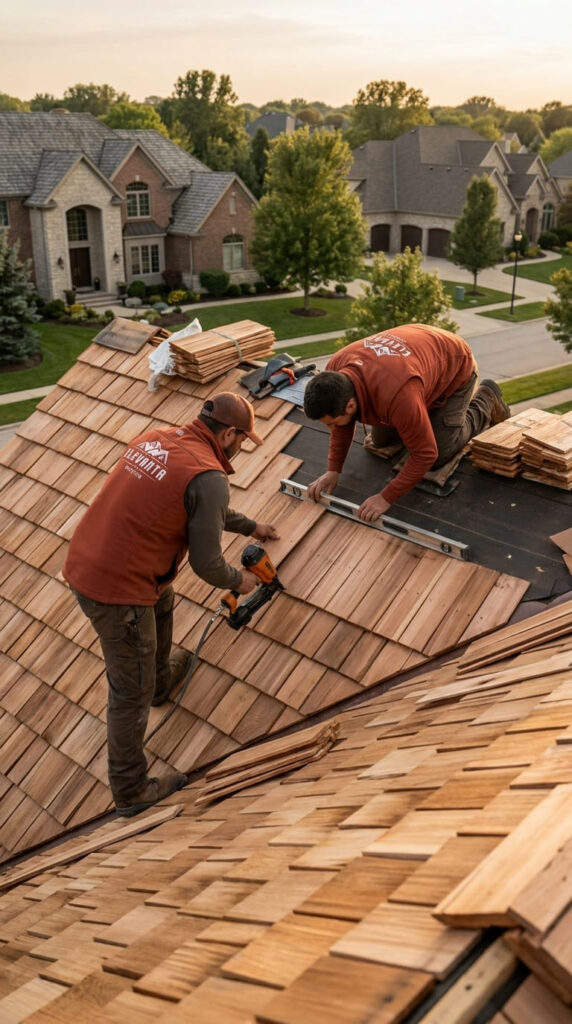
Wood roofing offers a natural, rustic look that’s popular in the Pacific Northwest and New England. Cedar is the most common species used. Wood shakes are thicker and hand-split; wood shingles are thinner and sawn. Both require more maintenance than other materials, regular treatments to prevent rot, mold, and moss, and some municipalities restrict their use due to fire risk.
- Cost per square foot: $6.00 – $14.00
- Total cost (2,000 sq ft roof): $12,000 – $28,000
- Lifespan: 25 – 35 years
Slate Roofing
Slate is in a category of its own. A genuine slate roof can last 75 to 150 years, some slate roofs installed in the late 1800s are still performing today. It’s fireproof, impervious to rot, and requires virtually no maintenance. The cost reflects all of that. Slate is also extremely heavy and requires experienced installers, which means not every roofing contractor can do the work.
- Cost per square foot: $12.00 – $30.00
- Total cost (2,000 sq ft roof): $24,000 – $60,000
- Lifespan: 75 – 150+ years
Synthetic Roofing
Synthetic roofing materials, made from rubber, plastic, or polymer blends, are designed to mimic the look of slate, wood shake, or tile at a fraction of the cost and weight. They’ve improved dramatically in quality over the last decade and are worth serious consideration for homeowners who want the look of a premium material without the structural or financial commitment.
- Cost per square foot: $5.00 – $12.00
- Total cost (2,000 sq ft roof): $10,000 – $24,000
- Lifespan: 30 – 50 years
Roofing Material Comparison Table
| Material | Cost Per Sq Ft | Total Cost (2,000 sq ft) | Lifespan | Maintenance Level |
| 3-Tab Asphalt | $3.00 – $5.00 | $6,000 – $10,000 | 15 – 20 yrs | Low |
| Architectural Asphalt | $4.50 – $7.50 | $9,000 – $15,000 | 25 – 30 yrs | Low |
| Class 4 Impact-Resistant | $5.50 – $10.00 | $11,000 – $20,000 | 30 – 40 yrs | Low |
| Corrugated Metal | $5.50 – $10.00 | $11,000 – $20,000 | 40 – 60 yrs | Very Low |
| Metal Shingles | $7.00 – $13.00 | $14,000 – $26,000 | 40 – 70 yrs | Very Low |
| Standing Seam Metal | $10.00 – $20.00 | $20,000 – $40,000 | 50 – 75 yrs | Very Low |
| Concrete Tile | $7.00 – $14.00 | $14,000 – $28,000 | 40 – 60 yrs | Low |
| Clay Tile | $10.00 – $20.00 | $20,000 – $40,000 | 50 – 100 yrs | Low |
| Wood Shakes | $6.00 – $14.00 | $12,000 – $28,000 | 25 – 35 yrs | High |
| Slate | $12.00 – $30.00 | $24,000 – $60,000 | 75 – 150+ yrs | Very Low |
| Synthetic | $5.00 – $12.00 | $10,000 – $24,000 | 30 – 50 yrs | Low |
Roof Replacement Cost by State (2026)
Here’s something most roofing cost guides skip entirely: where you live matters almost as much as what material you choose. Labor costs, local building codes, permit fees, material availability, and regional climate demands all create significant price differences from state to state.
A 2,000 sq ft roof with architectural asphalt shingles in rural Mississippi will cost thousands less than the same job in California or New York, not because the roof is different, but because labor markets, overhead costs, and code requirements vary dramatically.
| State | Average Cost (2,000 sq ft, Architectural Asphalt) | Notes |
| Texas | $9,000 – $16,000 | Hail damage common; Class 4 shingles popular; high storm demand |
| Florida | $10,000 – $18,000 | Hurricane codes require enhanced underlayment and fastening |
| California | $12,000 – $22,000 | High labor costs; fire-resistant materials often required |
| New York | $11,000 – $20,000 | High labor rates; strict code compliance; short work seasons |
| Colorado | $9,500 – $17,000 | High hail frequency; impact-resistant shingles widely used |
| Georgia | $8,500 – $15,000 | Moderate labor costs; high storm season activity |
| Arizona | $8,000 – $14,500 | Dry climate reduces moisture concerns; tile roofing popular |
| Illinois | $9,000 – $16,000 | Cold winters; ice and water barrier requirements add cost |
| Ohio | $8,500 – $15,500 | Moderate labor market; freeze-thaw cycles affect material choice |
| North Carolina | $8,500 – $15,000 | Hurricane exposure in coastal areas raises insurance requirements |
| Pennsylvania | $9,000 – $16,500 | Four-season climate; labor costs vary city vs rural |
| Washington | $10,000 – $18,000 | High rainfall requires premium underlayment; high labor costs |
| Louisiana | $9,500 – $17,500 | Hurricane zone; wind uplift requirements add significant cost |
| Michigan | $8,500 – $15,500 | Ice dam risk; cold-weather installation challenges |
| Nevada | $8,000 – $14,000 | Dry climate; lower maintenance roofs preferred; lower labor costs |
The states with the highest average roof replacement costs tend to be those with high labor costs (California, New York, Washington), strict building codes driven by weather risk (Florida, Louisiana), or both. States in the South Central and Midwest regions typically land on the lower end of national averages.
7 Factors That Drive Your Roof Replacement Cost
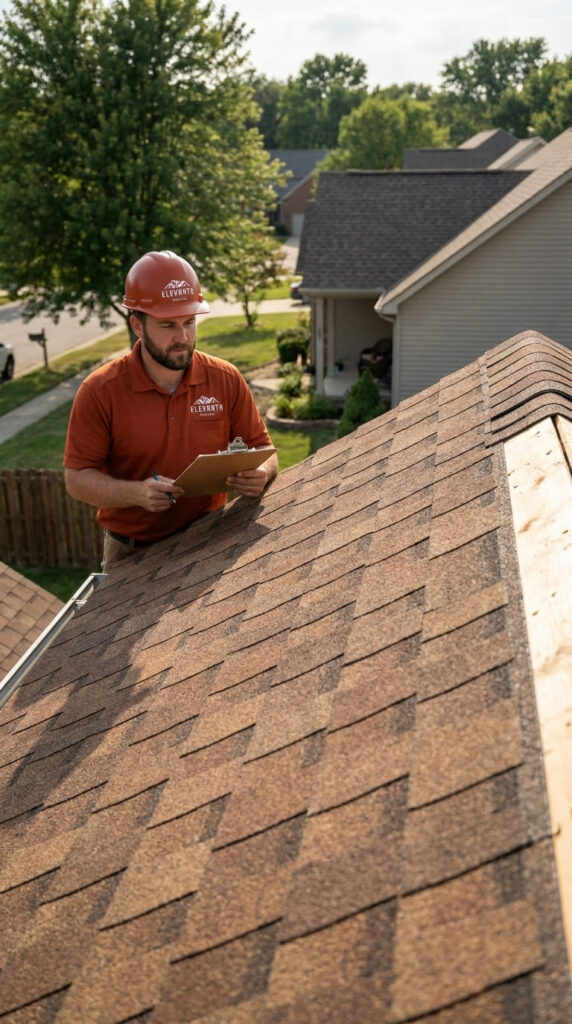
Now that you have the raw numbers, let’s talk about what actually moves the needle. Understanding these seven factors will help you read a contractor’s estimate intelligently and spot anything that doesn’t add up.
1. Roof Size and Square Footage
We’ve covered this already, but it bears repeating: roof size is the single biggest cost driver. Every extra square of roofing surface means more materials and more labor hours. And because your actual roof surface area is larger than your home’s footprint, the only accurate way to estimate your cost is to have a contractor measure the slope, not just look at your floor plan.
2. Roofing Material
Also covered above, but here’s the practical takeaway: for most homeowners, architectural asphalt shingles represent the best balance of cost, durability, and curb appeal. If you’re in a hail-heavy region, the upgrade to Class 4 impact-resistant shingles often pays for itself through insurance premium savings within three to five years. Metal roofing makes the most financial sense for homeowners planning to stay in their home for 20 or more years.
3. Roof Pitch and Complexity
A “pitch” describes how steeply your roof slopes. Roofers measure it as rise over run, a 4:12 pitch means the roof rises 4 inches for every 12 inches of horizontal distance. The steeper the pitch, the harder and slower the work, and the more safety equipment required.
Here’s how pitch affects your cost:
- Low-slope roof (2:12 or less): May require special materials (modified bitumen, EPDM rubber, TPO) designed for nearly flat surfaces
- Standard pitch (4:12 to 7:12): Standard pricing, most common on American homes
- Steep pitch (8:12 and above): Expect a 15 to 25 percent labor surcharge
- Very steep (12:12 and above): Can add 30 to 50 percent to total labor cost
Beyond pitch, complexity matters. Every valley (where two roof planes meet), every dormer, every chimney, every skylight, and every pipe penetration adds labor time and requires custom flashing work. A simple gable roof on a ranch home is the cheapest scenario. A Victorian or craftsman home with a complicated multi-plane roofline will cost significantly more per square than a simple roof of the same total area.
4. Tear-Off and Decking Condition
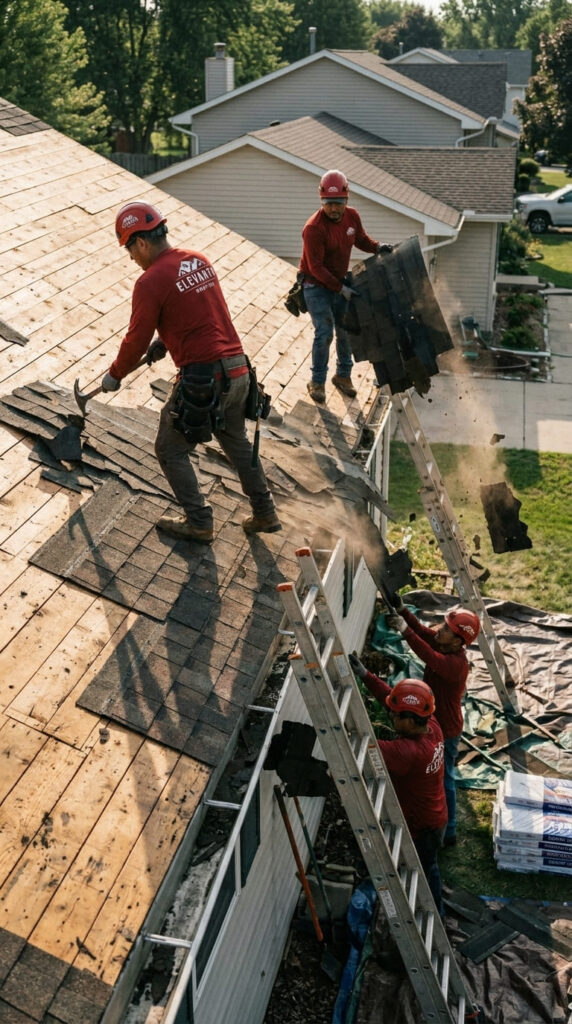
Every legitimate roof replacement starts with removing the old roof completely, stripping everything down to the roof deck (the plywood or OSB sheeting underneath). Some contractors will suggest “roofing over” or laying new shingles on top of old ones. Don’t do it. It shortens the lifespan of your new roof, voids most manufacturer warranties, and can hide serious underlying problems.
Tear-off typically costs $1.00 to $3.00 per square foot, and it should be included in every quote you receive.
The bigger unknown is the condition of your decking once the old roof comes off. If the plywood has rotted, water-damaged sections, or structural weakness, those areas have to be replaced before new roofing goes on. Decking repair costs $40 to $70 per sheet (standard 4×8 sheets), plus labor. On a typical job, replacing five to fifteen sheets of damaged decking adds $500 to $1,500 to your total. On a severely neglected roof, it can be much more.
Most reputable contractors include minor deck repairs in their base estimate and charge separately only for significant replacement. Make sure you ask about this upfront.
5. Labor Costs and Regional Market Rates
Labor typically accounts for 40 to 60 percent of your total roof replacement cost. In high cost-of-living metros, think New York City, San Francisco, Seattle, Boston, roofing labor rates are substantially higher than in rural areas or smaller cities.
Here’s what roofing labor generally costs across different market types in 2026:
| Market Type | Labor Rate (Per Square) | Examples |
| High cost metro | $180 – $280 per square | NYC, LA, SF, Seattle, Boston |
| Mid-size city | $130 – $200 per square | Denver, Atlanta, Dallas, Phoenix |
| Small city / suburban | $100 – $160 per square | Columbus, Memphis, Omaha, Boise |
| Rural | $75 – $130 per square | Rural South, Midwest, Great Plains |
Labor costs also fluctuate seasonally. Spring and fall are the busiest seasons for roofing contractors, which means higher prices and longer wait times. If your situation isn’t urgent, scheduling a replacement in late winter or early summer can sometimes save you 10 to 15 percent just by working with a contractor’s calendar.
6. Permits and Local Code Requirements
Most municipalities require permits for roof replacements, and most homeowners don’t think about this until it shows up on an estimate. Permit fees typically run $100 to $600 depending on your city or county. Your roofing contractor should pull the permit on your behalf, it’s part of doing the job properly, and the cost should be itemized in your estimate.
If a contractor suggests skipping the permit to save money, walk away immediately. An unpermitted roof replacement can cause problems when you sell your home, may void your homeowner’s insurance in the event of a claim, and leaves you with no code-compliance protection if something goes wrong.
Some states and municipalities also have specific material requirements driven by climate risk, Florida’s wind uplift standards, California’s fire-resistant material zones, and Texas’s building codes around hail-resistant products are examples. These requirements can add cost but they exist for good reason.
7. Additional Components You Might Overlook
A roof replacement isn’t just shingles. A complete job includes several components that homeowners often don’t realize are part of the project, and that affect the total cost:
Underlayment: The layer between your decking and shingles that provides a secondary moisture barrier. Synthetic underlayment is more durable than traditional felt and costs $1.50 to $2.50 per square foot. Most reputable contractors use synthetic as standard in 2026.
Drip Edge: Metal flashing that runs along the edges of your roof to direct water into your gutters rather than behind them. Costs $1.00 to $2.00 per linear foot and is often required by code.
Ice and Water Shield: A self-adhering membrane applied in vulnerable areas, valleys, eaves, around skylights, to prevent water infiltration from ice dams or wind-driven rain. Costs $1.80 to $3.00 per square foot in the areas where it’s applied. Required by code in most northern states.
Ridge Cap: The specialized shingles that cover the peak of your roof. A proper ridge cap provides ventilation and weather protection. Always insist on manufacturer-matching ridge cap, not cut pieces from field shingles.
Flashing: Sheet metal installed around chimneys, skylights, walls, and valleys to prevent water infiltration at joints. Chimney flashing runs $8 to $15 per linear foot. Skylight flashing is $150 to $300 per skylight. Never let a contractor reuse old flashing on a new roof, it should always be replaced.
Pipe Boots / Pipe Flashing: Rubber or metal collars that seal around plumbing vents. They degrade over time and should always be replaced during a full roof replacement. Cost: $50 to $100 each.
Ventilation: Proper attic ventilation extends the life of your roof by reducing heat buildup and moisture. A well-designed system includes intake vents (soffits) and exhaust vents (ridge vents or box vents). Inadequate ventilation can void your shingle warranty. This should be assessed and addressed during every roof replacement.
Fascia and Soffit: The boards under and around your roof’s edge. Not always replaced during a roofing project, but if they’re rotted or damaged, this is the time to address them. Fascia replacement costs $4 to $9 per linear foot; soffit runs $3 to $6 per linear foot.
What a Legitimate Roofing Estimate Should Include
One of the biggest mistakes homeowners make is accepting a lump-sum quote. “New roof for $11,000” tells you almost nothing. You have no idea if it includes quality underlayment, what brand of shingles, whether tear-off is included, or what happens if they find rotted decking.
A legitimate, written estimate from a professional roofing contractor should itemize all of the following:
- Complete tear-off and disposal of existing roofing material
- Decking inspection and per-sheet pricing for any replacement needed
- Underlayment (specify synthetic or felt, and brand)
- Starter strip on all eaves
- Drip edge on all eaves and rakes
- Ice and water shield (specify where applied)
- Roofing material specified by manufacturer, product line, and color
- Ridge cap (specify brand matching main shingles)
- All pipe boots and penetration flashing (new, not reused)
- Valley flashing material
- Step flashing and counter-flashing at all walls and chimneys
- Ventilation (what type, how much)
- Permit fees (or explicit statement that permits are included)
- Cleanup and haul-away of all debris
- Manufacturer’s material warranty (specify length and coverage)
- Contractor’s workmanship warranty (specify length and coverage)
If any of these line items are missing from an estimate, that’s not just an oversight, it’s a red flag. Ask the contractor to add it, and watch how they respond. If they push back or can’t explain why it’s not included, that tells you something important about how they operate.
Does Homeowners Insurance Cover Roof Replacement?
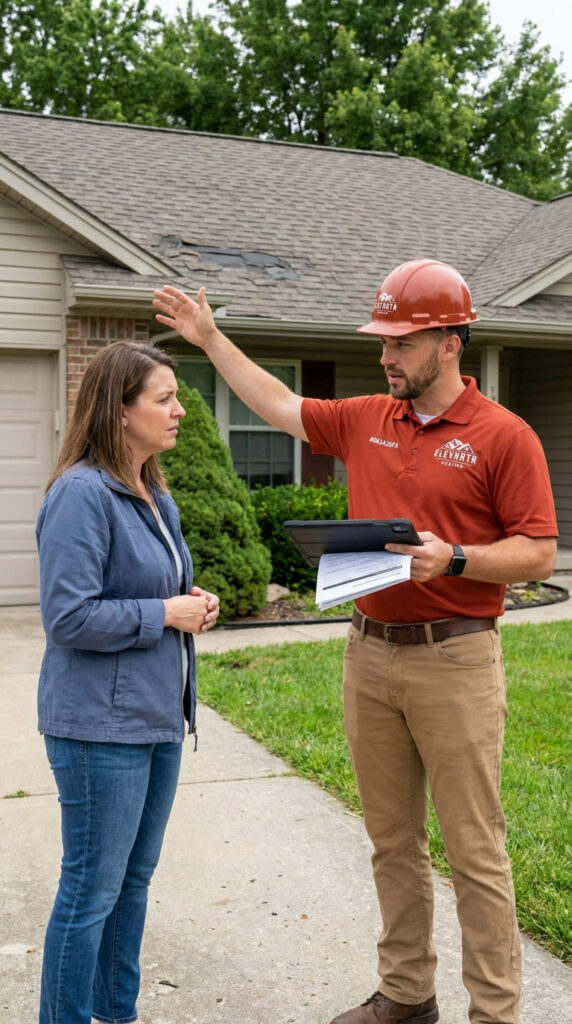
It depends entirely on what caused the damage and what type of policy you have.
Most standard homeowners insurance policies cover roof damage caused by sudden, unexpected events, hail, wind, a falling tree, fire, or lightning. What they typically don’t cover is gradual wear and tear, deterioration due to age, poor maintenance, or improper installation.
But here’s where it gets complicated.
RCV vs. ACV: The Policy Distinction That Changes Everything
There are two fundamentally different ways your insurance company might calculate your payout, and most homeowners don’t know which type they have until they file a claim.
Replacement Cost Value (RCV): pays what it actually costs to replace your roof at today’s prices, minus your deductible. If your roof replacement costs $14,000 and your deductible is $2,000, you receive $12,000. This is the better policy type and what you want.
Actual Cash Value (ACV): pays the depreciated value of your roof — meaning your insurer subtracts years of wear and tear based on the roof’s age and expected lifespan. A 15-year-old asphalt shingle roof might be depreciated by 60 percent. On a $14,000 replacement, an ACV policy might pay only $3,600 to $5,600 after depreciation and your deductible. You’re on the hook for the rest.
Many insurers have been pushing ACV policies in recent years because they carry lower monthly premiums. The problem is that homeowners choose them without fully understanding what that means when they actually need to use the insurance. Pull out your declarations page right now and look for “RCV” or “ACV” next to your roof coverage. If you’re on an ACV policy, talk to your agent about whether switching makes sense before you need it.
Wind and Hail Deductibles
Many states, particularly in the South and Midwest where hail and windstorms are common, have seen insurers move from flat-dollar deductibles to percentage-based deductibles specifically for wind and hail claims. This distinction is critical:
| Home Value | 1% Wind/Hail Deductible | 2% Wind/Hail Deductible |
| $250,000 | $2,500 | $5,000 |
| $350,000 | $3,500 | $7,000 |
| $450,000 | $4,500 | $9,000 |
| $600,000 | $6,000 | $12,000 |
A 2 percent wind and hail deductible on a $400,000 home means you’re paying $8,000 out of pocket before insurance covers anything, which might be close to your total replacement cost for a smaller roof. Know your deductible structure before you assume insurance will cover most of the bill.
Roof Age Payment Schedules
A growing number of insurance policies in 2026 use a sliding scale based on your roof’s age at the time of damage. The older your roof, the less they pay, even on an RCV policy:
| Roof Age at Time of Damage | Typical Insurance Coverage |
| 0 – 5 years | 90 – 100% of replacement cost |
| 6 – 10 years | 70 – 85% of replacement cost |
| 11 – 15 years | 50 – 65% of replacement cost |
| 16 – 20 years | 30 – 50% of replacement cost |
| 21+ years | 10 – 30% of replacement cost |
If your roof is approaching the end of its lifespan and you live in a storm-prone area, this is worth understanding before a hailstorm makes the decision for you.
How to File a Roof Insurance Claim
If you believe your roof has storm damage, here’s the process most homeowners should follow:
First, document everything before anyone touches anything. Take photos and videos of every area of visible damage. Note the date of the storm and keep any weather reports you can find that confirm the event.
Second, contact a reputable local roofing contractor for a damage assessment before you call your insurance company. A good contractor who understands the claims process can help you identify damage you might have missed and make sure nothing is overlooked in the claim.
Third, file your claim with your insurer and schedule their adjuster’s inspection. You have every right to have your roofing contractor present during that inspection to advocate for a thorough assessment.
Fourth, review the insurer’s estimate carefully. If it seems low or misses areas of damage, a reputable contractor can help you dispute the scope of work or request a re-inspection.
One important legal note that applies in most states: it is illegal for a roofing contractor to offer to waive your deductible. If any contractor makes that offer, it’s a serious red flag — walk away.
Roof Replacement or Roof Repair? How to Decide
Not every roofing problem calls for a full replacement. Sometimes a targeted repair is all you need, and it can save you thousands of dollars. The challenge is knowing the difference.
Here’s a straightforward way to think about it:
Lean toward repair when:
- The damage is isolated to a small area (less than 20 to 25 percent of the total roof surface)
- Your roof is less than 15 years old and otherwise in good condition
- You have only a few missing or damaged shingles
- The problem is limited to flashing around a chimney, skylight, or vent
- A qualified inspection confirms the decking beneath is solid and dry
Lean toward full replacement when:
- Your roof is within 5 years of the end of its expected lifespan
- Damage is widespread across multiple sections
- You have multiple active leaks or leaks in different locations
- Your decking shows signs of rot, moisture damage, or structural weakness
- You’re experiencing granule loss across large sections of the roof (means shingles are failing)
- Your current material has been discontinued (matching new shingles becomes nearly impossible)
- You want to upgrade to a different material type
The math also matters. As a general rule, if the cost of repairs exceeds 50 percent of what a full replacement would cost, and your roof is older, the replacement is usually the smarter financial decision. You’ll have a fresh warranty, better performance, and peace of mind for another 25 to 30 years instead of patching a roof that will need replacement within a few years anyway.
| Situation | Typical Cost | Best Choice |
| 3 – 5 missing shingles, young roof | $150 – $500 | Repair |
| Flashing failure around chimney | $300 – $1,200 | Repair |
| One section damaged by fallen branch | $800 – $2,500 | Repair (if roof is young) |
| 20-year-old roof, multiple leaks | $400 – $1,500 | Replace (repair costs will keep coming) |
| Storm damage covering 30%+ of roof | $3,000 – $8,000 to repair | Replace (check insurance) |
| Sagging sections, rotted decking | Varies widely | Replace immediately |
8 Signs You Need a Roof Replacement in 2026
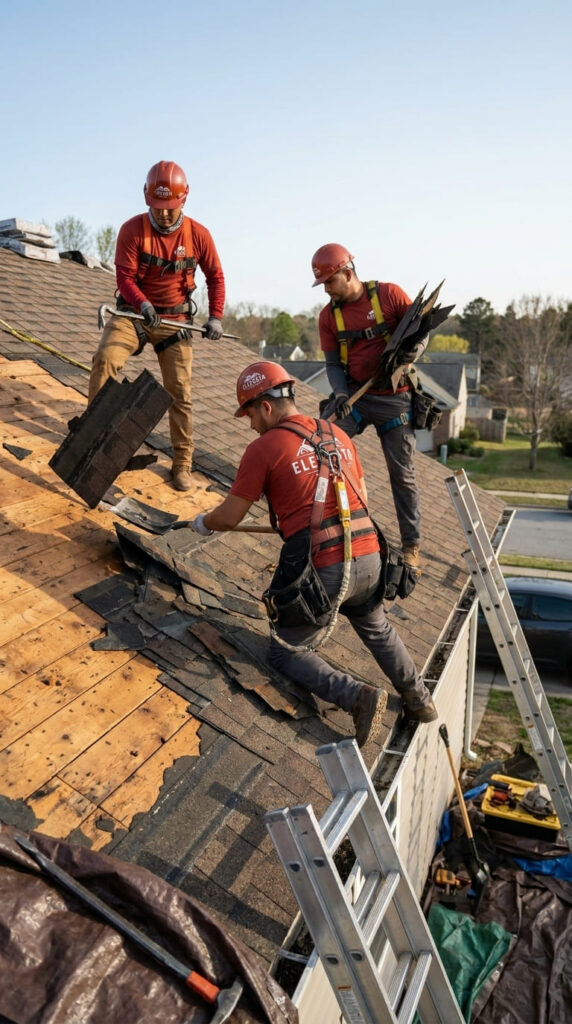
Your roof won’t send you a calendar invite when it’s time to go. But it does send signals, you just have to know what to look for. Here are the eight most reliable indicators that a full replacement is in your near future.
1. Your Roof Is Past Its Expected Lifespan
The most reliable predictor of when you need a new roof isn’t damage, it’s age. Asphalt shingles are typically warranted for 25 to 30 years, but real-world performance in hot climates or areas with severe weather can shorten that to 20 years or less. If your roof is approaching or past that window, start budgeting even if it’s not obviously failing yet.
2. Curling, Cupping, or Clawing Shingles
Shingles that curl upward at the edges (cupping) or downward in the middle (clawing) are telling you they’ve lost their flexibility and are beginning to fail. This is a widespread problem, not a localized one, and it typically means the roof is approaching end of life.
3. Granules in Your Gutters
Asphalt shingles are coated with granules that protect the asphalt from UV exposure. As shingles age, they shed these granules. If you’re cleaning your gutters and finding significant amounts of grit, especially after rain, your shingles are eroding. Once granule loss is widespread, the shingles will deteriorate quickly.
4. Missing or Broken Shingles
A few missing shingles here and there can be repaired. But if shingles are going missing regularly after every storm, or if you have missing shingles in multiple areas of the roof, that’s a systemic problem indicating the roof’s fastening system is failing.
5. Visible Daylight in the Attic
Go into your attic on a sunny day and look up. If you can see daylight coming through the roof boards, that’s not just a shingle problem, it means your decking has gaps or damage that water will find long before you notice it from the inside.
6. Water Stains or Leaks Inside the Home
Active leaks or water stains on your ceiling or attic insulation are obvious warning signs. But the tricky thing is that the location of the stain inside your home often doesn’t match the location of the problem on the roof, water travels. By the time you see a stain inside, the water has been infiltrating for a while.
7. Sagging Sections
A sagging roof is one of the most serious warning signs and should prompt an immediate inspection. Sagging indicates structural problems, either with the decking or the underlying framing, that go beyond surface-level shingle issues. This is not a repair; it’s an emergency replacement.
8. Moss, Algae, or Lichen Growth
Some moss and algae on a roof looks like a cosmetic issue but it’s actually a sign of moisture retention. Moss holds water against the shingles and accelerates their breakdown. While algae (the black streaks you often see on roofs) is mostly cosmetic, lichen, which is more stubborn, can physically damage shingles as it roots into the surface. If growth is widespread and recurring despite cleaning, the underlying shingles may be compromised.
How to Save Money on Roof Replacement Without Cutting Corners
Nobody wants to overpay for a new roof. But the way to save money isn’t to go with the cheapest bid, it’s to be strategic about every decision in the process. Here’s how to do that legitimately.
Get at least three written, itemized estimates
This is the single most effective thing you can do. Prices for the same job can vary by $3,000 to $7,000 between contractors in the same market. Compare line by line, not just the bottom number. A low bid that skips underlayment upgrades or uses cheaper shingles isn’t actually cheaper, it’s a different, lower-quality job.
Consider Class 4 impact-resistant shingles if you live in a hail-prone region
The upfront cost is higher than standard architectural shingles, but if your insurance carrier offers a 20 to 30 percent annual premium discount for Class 4 shingles, you can recoup the difference within two to four years, and then save money every year after that for the life of the roof.
Schedule during off-peak season
Fall (especially September and October) and spring are the busiest seasons for roofers. Winter and early summer are slower in most markets. Some contractors will offer slightly better pricing or prioritize scheduling when their workload is lighter.
Don’t delay a necessary replacement
This sounds counterintuitive, but waiting too long is one of the most expensive mistakes homeowners make. A failing roof that develops active leaks leads to water damage to your decking, insulation, drywall, framing, and in severe cases your possessions and structural elements. What would have been a $11,000 roof replacement can become a $20,000 project when significant decking replacement and interior repairs are added to the bill.
Ask about manufacturer rebates and energy incentives
Some shingle manufacturers run promotional pricing programs that contractors can pass along to customers. Cool roof materials, including certain reflective shingles and most metal roofs, may qualify for federal energy tax credits in 2026. Metal roofing and reflective shingles can meaningfully reduce cooling costs in warm climates, so factor long-term energy savings into your material comparison.
Avoid financing with high-interest products
Roofing company financing often looks attractive but can carry interest rates of 15 to 25 percent. A home equity loan or HELOC will almost always be a better option if you need to finance the project. More on this in the next section.
How to Finance a Roof Replacement in 2026
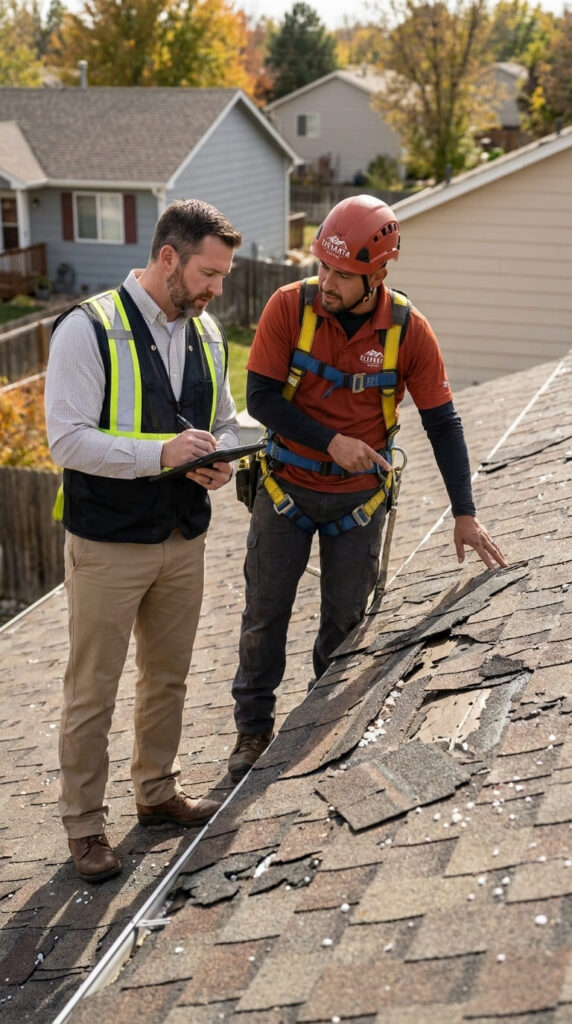
A new roof is rarely an emergency that gives you weeks to plan, it’s often a storm, a sudden leak, or an inspection finding that accelerates your timeline. If you don’t have the cash on hand, here are your main financing options ranked roughly from best to most expensive.
Home Equity Loan or HELOC
If you have equity in your home, this is almost always the best financing option. Interest rates are significantly lower than personal loans or credit cards, interest is often tax-deductible if the funds are used for home improvement, and repayment terms are flexible. A HELOC (home equity line of credit) works especially well because you can draw only what you need.
Personal Loan
No collateral required, faster approval than home equity products, and fixed monthly payments. Interest rates are higher than home equity options, typically 8 to 20 percent depending on your credit score, but for homeowners without significant equity, a personal loan from a reputable lender is a reasonable choice.
Cash
Obviously the cheapest option if you have it. No interest, no monthly payments, and some contractors offer a small discount for cash or check payment. If you’re in a financial position to pay cash, this is always the best choice financially.
Homeowners Insurance Claim
If your roof damage is from a covered event, this isn’t really “financing”, it’s using the product you’ve been paying for. File the claim, understand your deductible and payout structure, and let your insurance work as intended.
0% APR Credit Card
For smaller roofing projects or a portion of the cost, a credit card with an introductory 0 percent APR period can work well, as long as you pay it off before the promotional period ends. Use this only if you’re disciplined about the payoff timeline.
Roofing Company Financing
Many roofing companies offer their own financing, often through third-party lenders. The convenience is real, but the interest rates can be high. Always compare the total cost of the loan, not just the monthly payment, against other options before signing.
Government and State Programs
Depending on where you live, certain low-income homeowner assistance programs, community development grants, or state energy efficiency programs may offer partial funding or favorable loan terms for roof replacement. USDA Rural Development programs, for example, offer home repair loans and grants for qualifying rural homeowners. Worth researching before ruling out.
| Financing Option | Typical Interest Rate | Best For |
| Home Equity Loan | 6 – 10% | Homeowners with significant equity |
| HELOC | 6 – 10% variable | Flexible draws, equity available |
| Personal Loan | 8 – 22% | No equity, good credit score |
| Cash | 0% | Best option if available |
| Insurance Claim | N/A (deductible) | Storm or sudden damage |
| 0% APR Credit Card | 0% intro, then 20%+ | Small amounts, disciplined payoff |
| Roofing Company Finance | 12 – 25% | Last resort; compare carefully |
How to Choose the Right Roofing Contractor
Your choice of contractor matters at least as much as your choice of material. The best shingles money can buy, installed by an inexperienced or careless crew, will fail prematurely. Meanwhile, an experienced, detail-oriented contractor working with standard materials will give you a roof that performs beautifully for decades.
Here’s what to look for, and what to watch out for.
Verify Licensing and Insurance
Every state has its own contractor licensing requirements. Before you do anything else, verify that the contractor holds a valid license in your state and carries both general liability insurance and workers’ compensation. Ask for the policy certificate and call the insurance company to confirm it’s active. If a worker is injured on your property and the contractor lacks workers’ comp, you may be financially liable.
Look for Local Presence and Track Record
A roofing company with an established physical address, local reviews, and a history of completed projects in your area is a fundamentally different thing from a company that showed up after your neighborhood’s last hailstorm. After major storm events, “storm chasers”, out-of-town contractors who follow the damage, flood local markets offering fast quotes and low prices. They’re often gone long before any warranty issues surface. Stick with companies that have been operating in your area for years and have a verifiable portfolio of local work.
Ask for References and Verify Them
Any reputable contractor can provide references from recent customers. Don’t just take the list, actually call two or three people. Ask whether the job came in on budget, whether the crew was professional and cleaned up thoroughly, and whether they’d hire the same contractor again.
Insist on a Written, Itemized Estimate
We’ve covered what should be in an estimate already. If a contractor quotes you over the phone or from satellite imagery without doing an in-person inspection and measurement of your roof, that quote is not reliable. An accurate estimate requires a physical inspection of the decking condition, flashing, ventilation, and all components.
Understand the Warranty Structure
There are two separate warranties involved in every roofing job. The manufacturer’s material warranty covers defects in the shingles themselves, typically 25 to 50 years depending on the product, but the coverage is prorated and conditions apply. The contractor’s workmanship warranty covers installation errors, this is the one that protects you if a flashing is installed incorrectly or a vent isn’t properly sealed. Workmanship warranties from reputable contractors typically run 5 to 15 years. If a contractor doesn’t offer a written workmanship warranty, that’s a significant red flag.
Watch for These Red Flags
Some warning signs are obvious, others less so. Be cautious if a contractor:
- Asks for a large upfront deposit (more than 10 to 15 percent) before work begins
- Pressures you to sign immediately or says the price is only good today
- Suggests skipping the permit to save time or money
- Offers to waive or absorb your insurance deductible
- Provides a vague or lump-sum estimate without itemization
- Has no verifiable local presence, reviews, or references
- Arrives uninvited after a storm event offering an immediate inspection
Frequently Asked Questions About Roof Replacement Cost
How much does it cost to replace a 1,500 sq ft roof?
For a 1,500 sq ft roof using architectural asphalt shingles, expect to pay between $6,000 and $16,500 nationally in 2026. The wide range reflects differences in material grade, labor costs by region, and roof complexity. A straightforward gable roof in a moderate-cost market will land at the lower end; a complex roofline in a high-labor market will push toward the higher end.
What is the cheapest type of roof replacement?
Three-tab asphalt shingles are the least expensive roofing material, with installed costs ranging from $3.00 to $5.00 per square foot. For a 2,000 sq ft roof, that’s roughly $6,000 to $10,000 total. However, 3-tab shingles have the shortest lifespan of any common roofing material (15 to 20 years) and the lowest wind resistance. Most roofing professionals recommend at least upgrading to architectural shingles for better long-term value.
How long does a roof replacement typically take?
Most residential roof replacements are completed in one to three days. A straightforward single-story home with a simple roofline and asphalt shingles might be done in a single full day. Larger homes, steeper pitches, or complex designs requiring extra flashing work and care can take two to three days. Weather delays can extend the timeline.
Can I replace my own roof to save money?
Technically yes, roofing is not impossible as a DIY project. But it’s genuinely dangerous work, requires specialized knowledge to do correctly, and mistakes can lead to leaks, water damage, and a voided material warranty. Most manufacturer warranties are conditioned on installation by a licensed contractor. For most homeowners, the cost savings from DIY don’t justify the risk to safety, warranty, and quality.
How often should a roof be replaced?
It depends entirely on the material. Asphalt shingles: 20 to 30 years. Architectural or premium asphalt: 25 to 50 years. Metal roofing: 40 to 75 years. Tile (clay or concrete): 50 to 100 years. Slate: 75 to 150+ years. Your climate matters too, roofs in regions with extreme heat, severe hail, or high humidity tend to wear faster than identical roofs in milder climates.
What time of year is cheapest to replace a roof?
Late winter (January through February) and early summer (June in most markets) tend to be slower periods for roofing contractors, which can create more scheduling flexibility and sometimes slightly better pricing. Fall is the busiest and most expensive season. Spring is also busy due to storm season in many regions.
Does a new roof increase my home’s value?
Yes, consistently. A new roof is one of the home improvement projects with the strongest ROI at resale. Studies from Remodeling Magazine’s annual Cost vs. Value reports consistently show asphalt shingle roof replacements returning 55 to 70 percent of their cost at resale, and that doesn’t account for the fact that an aging roof can be a dealbreaker or price reduction trigger during a home sale inspection. Buyers and their inspectors flag old roofs, and a failing roof can derail a sale or force a price cut larger than the replacement cost would have been.
How many quotes should I get for a roof replacement?
At minimum, three. Three quotes give you enough data to understand the fair market range for your specific project, identify any outliers in either direction, and make a meaningful comparison of what each contractor is actually including. For larger, more complex, or more expensive projects, metal roofing, tile, large homes, getting four or five quotes is worthwhile given the dollar amounts involved.
Final Thoughts: Is Roof Replacement Worth It in 2026?
Here’s the honest answer: a new roof is never a glamorous home improvement. You won’t walk into it and admire it the way you would a new kitchen or bathroom. Most people barely think about their roof until something goes wrong.
But that’s precisely what makes it one of the most important investments you can make in your home.
Every other system in your house, your insulation, your framing, your electrical, your HVAC, your flooring, your walls, exists under the protection your roof provides. When the roof goes, everything else is vulnerable. Water doesn’t announce itself or wait for a convenient time. It finds the path of least resistance, and by the time you notice it inside your home, it’s already been working for a while.
The homeowners who get the best outcomes from a roof replacement are the ones who don’t wait for the emergency. They plan ahead, understand their options, get multiple qualified bids, choose quality materials that match their climate and their long-term plans, and hire a contractor they’ve genuinely vetted.
If you’ve read this far, you’re already ahead of most people when it comes to understanding what a fair roof replacement should look like, what it should cost, and how to navigate the process with confidence. The next step is getting eyes on your specific roof from a qualified local professional, because all the national averages in the world don’t tell you what your roof, on your home, in your market, actually needs.
When you’re ready to take that step, make sure you’re working with a licensed, insured, locally established roofing contractor who will inspect your roof in person, give you a written and itemized estimate, and stand behind their work with a real workmanship warranty.
That combination, the right information, the right material, and the right contractor, is what turns a roof replacement from a stressful expense into a confident investment in your home.