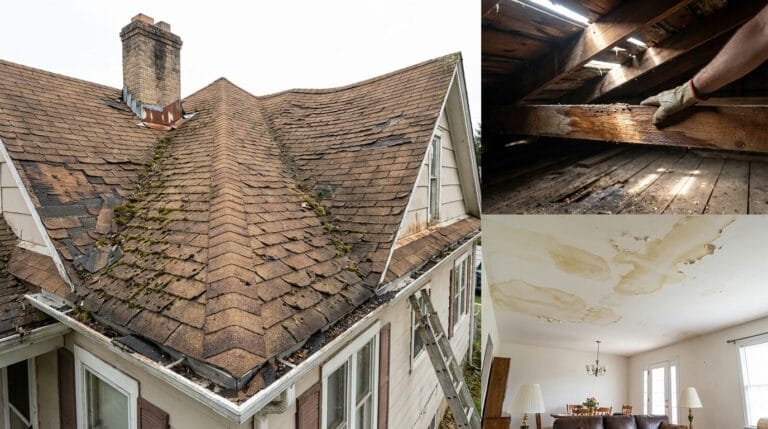

The average roof repair cost in 2026 runs between $150 and $8,000 for most US homeowners. Minor repairs like replacing a few shingles or patching a small leak cost $150 to $1,000. Moderate repairs including flashing replacement, valley work, or limited decking damage run $1,000 to $3,500. Major structural repairs like a sagging roof or extensive water damage climb to $3,500 to $8,000 or more.
What you actually pay depends on the type of damage, your roofing material, your location, and how long you waited before calling someone. Every section below breaks down one of those factors with real 2026 numbers.
Average Roof Repair Cost in 2026
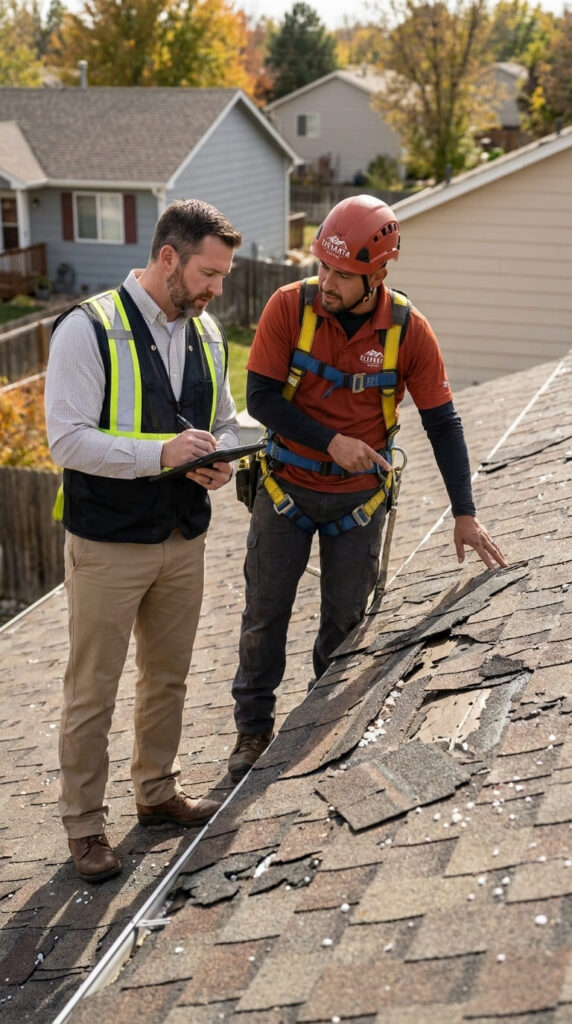
Most homeowners land somewhere between $500 and $1,500 for a typical repair. But that range means nothing without understanding what level of damage you’re dealing with. Here’s the breakdown that actually helps you budget:
| Damage Level | Cost Range | What It Typically Involves |
|---|---|---|
| Minor | $150 to $1,000 | 1 to 5 shingles, isolated leak, pipe boot, small flashing gap |
| Moderate | $1,000 to $3,500 | Multiple leaks, valley or chimney flashing, limited decking damage |
| Major | $3,500 to $8,000 | Sagging roof, extensive water damage, large decking replacement |
| Emergency | Add $150 to $1,000 | Same-day or after-hours response premium |
| Replacement territory | $8,000 and up | When repair cost exceeds 40 to 50 percent of a new roof |
The biggest driver of cost isn’t the repair itself. It’s how long the damage has been active. A $400 shingle repair left alone through a winter becomes a $1,800 decking job. A slow leak ignored for two years becomes a $4,000 project with interior damage added on top. Every month you wait on a known roof problem, the bill grows.
Roof Repair Cost by Type of Repair
This is what most guides skim over. “Roof repair” covers fifteen completely different types of work, each with its own price range. Here’s what each one actually costs in 2026.
| Repair Type | Typical Cost Range |
|---|---|
| Roof leak repair | $150 to $2,500 |
| Shingle repair or replacement | $150 to $900 |
| Chimney or skylight flashing | $200 to $1,200 |
| Valley flashing | $300 to $1,000 |
| Sagging roof repair | $800 to $7,000 |
| Roof decking or sheathing | $500 to $3,000 |
| Ridge cap repair | $250 to $750 |
| Fascia and soffit | $600 to $6,000 |
| Roof vent or pipe boot | $75 to $500 |
| Hail damage repair | $700 to $4,000 |
| Storm and wind damage | $200 to $5,000 |
| Ice dam damage | $500 to $3,000 |
| Flat roof repair | $200 to $2,500 |
| Skylight repair | $300 to $3,000 |
| Emergency repair | Standard cost plus $150 to $1,000 |
A few of these deserve more detail because homeowners consistently underestimate them.
Roof leaks
Roof leaks are the most common call, and the cost swings wildly based on one thing: how long the leak has been active. A fresh, localized leak from a failed boot or a blown shingle costs $150 to $750 to fix. A leak that has been quietly saturating insulation and wetting decking for months costs $800 to $2,500 or more because now you’re replacing structural material, not just patching the surface.
Flashing failures
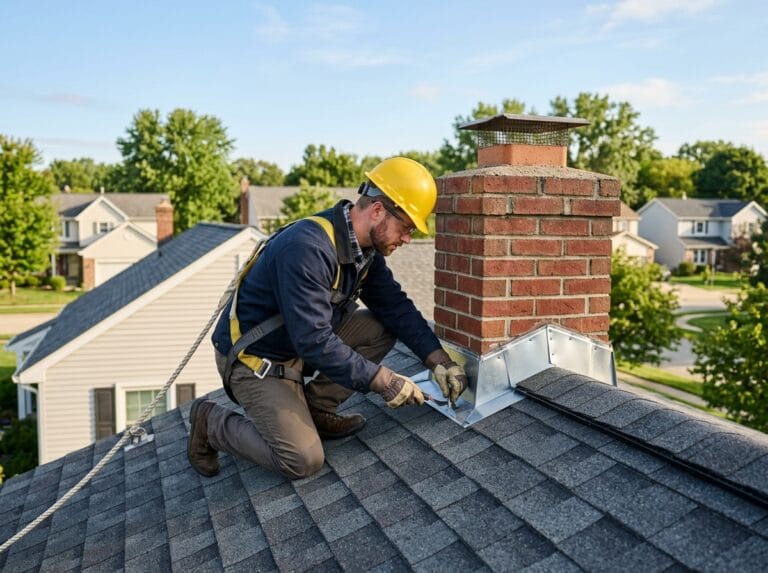
Flashing failures cause more leaks than almost any other single issue. Every place where something meets your roof, chimney, skylight, dormer, wall, has flashing. When it corrodes, separates, or was installed incorrectly, water finds it fast. Chimney flashing repair runs $200 to $700. Skylight flashing runs $300 to $800. Valley flashing, where two roof planes meet and water concentrates, costs $300 to $1,000 depending on the valley length.
Sagging roof repairs
Sagging roof repairs are the most serious and most expensive item on that list. Sagging means the structure beneath the surface, the decking, rafters, or trusses, has been compromised. If it’s limited decking over solid rafters, you might get away with $800 to $2,500. If the rafters or trusses themselves are damaged, structural repair by a licensed contractor runs $2,500 to $7,000 before the roofing material goes back on top.
Ice dam damage
Ice dam damage is a regional issue that catches northern homeowners off guard because the damage often shows up inside the house weeks after the actual event. Fixing the immediate damage runs $500 to $3,000. Fixing the underlying cause, which is almost always attic insulation and ventilation deficiency, adds another $1,500 to $4,000 but prevents the same problem from recurring every winter.
Roof Repair Cost by Material
Your roofing material affects both the cost of the parts and the cost of the labor. Premium, specialized, or discontinued materials require more skilled contractors and more sourcing effort. Here’s the 2026 breakdown:
| Roofing Material | Minor Repair | Moderate Repair | Key Reason for Cost Difference |
|---|---|---|---|
| 3-Tab Asphalt | $150 to $400 | $400 to $1,200 | Most affordable and widely available |
| Architectural Asphalt | $200 to $500 | $500 to $1,500 | Slight material premium; matching harder on older roofs |
| Class 4 Impact-Resistant | $300 to $700 | $700 to $2,000 | Premium product; limited availability in some markets |
| Corrugated Metal | $300 to $700 | $700 to $2,000 | Panel replacement common; fastener complexity |
| Standing Seam Metal | $500 to $1,200 | $1,200 to $3,500 | Specialized installer required; hidden fastener system |
| Concrete Tile | $400 to $900 | $900 to $2,800 | Tile sourcing; heavy; underlayment often replaced too |
| Clay Tile | $500 to $1,200 | $1,200 to $3,500 | Specialty matching; fragile to work around |
| Wood Shakes | $400 to $1,000 | $1,000 to $2,500 | Fire treatment requirements; moisture treatment |
| Slate | $400 to $1,200 | $1,200 to $4,000 | Rare specialists; natural stone matching; slow labor |
| EPDM or TPO Flat Roof | $200 to $700 | $700 to $2,500 | Membrane specialists only; bonding or welding required |
One thing worth flagging: any material older than ten years can be difficult to match. Manufacturers discontinue colors and update formulations regularly. If your roof is older, get confirmation from the contractor that matching material is available before the job starts. In some cases, homeowners choose to repair a larger section than the damage requires just to avoid a visible patchwork result.
Roof Repair Cost by State in 2026
Nobody covers this, and it matters. The same moderate roof repair, say chimney flashing and a small leak, can cost $800 in Arizona, $250 to $1200 for roof leak repair in New Jersey, and $2,800 in California for the same scope of work. Labor markets, local building codes, permit fees, and regional demand patterns all create real geographic price variation.
| State | Moderate Repair Cost Range | Key Regional Factors |
|---|---|---|
| Texas | $900 to $2,200 | High storm and hail demand; competitive contractor market |
| Florida | $1,000 to $2,600 | Hurricane codes add cost; high post-storm demand |
| California | $1,300 to $3,000 | Highest labor costs; fire-resistant material requirements |
| New York | $1,200 to $2,800 | High labor rates; strict code compliance; metro premium |
| Colorado | $1,000 to $2,400 | High hail frequency; impact-resistant material demand |
| Georgia | $800 to $2,000 | Moderate labor market; active storm season |
| Illinois | $900 to $2,200 | Ice dam risk; moderate labor costs |
| Arizona | $800 to $1,900 | Dry climate; lower moisture risk; competitive pricing |
| North Carolina | $850 to $2,100 | Hurricane exposure on coast; moderate interior rates |
| Washington State | $1,100 to $2,700 | High rainfall; premium underlayment; high labor costs |
| Louisiana | $1,000 to $2,500 | Hurricane zone; wind uplift standards |
| Michigan | $900 to $2,100 | Ice dam risk; seasonal demand surges |
| Massachusetts | $1,100 to $2,700 | High labor; ice dam risk; older home complexity |
| Tennessee | $800 to $1,900 | Moderate climate; competitive market |
| Nevada | $750 to $1,800 | Dry climate; lower labor costs; fewer code requirements |
States with the highest repair costs share two things: high labor rates and strict weather-driven code requirements. States in the South Central and interior Midwest consistently sit at the lower end for equivalent work, though storm surges can temporarily push prices up significantly in affected areas.
6 Factors That Drive Your Roof Repair Cost
1. Type and Severity of Damage
The most important variable by far. A fresh isolated leak is a completely different job from widespread storm damage across two slopes. Severity also determines urgency, and urgency adds cost.
2. Roofing Material
Premium or discontinued materials require specialized labor and harder-to-source parts. Slate needs a slate-experienced installer. Standing seam metal needs someone who works with that system specifically. Any material past ten years comes with matching challenges that can push the scope wider than the damage alone requires.
3. Roof Pitch and Accessibility
Steep roofs mean slower work, more safety equipment, and higher labor costs. A 10:12 pitch can add 25 to 50 percent to the labor component compared to the same repair on a low-slope roof. Multi-story homes, tight urban lots, and difficult staging access all add similar premiums.
4. Labor Costs and Local Market Rates
The state table above captures regional variation, but within each state there’s further variation between urban and rural markets and between busy and slow seasons. Spring and fall in storm-belt states are peak demand periods where pricing and wait times both increase. Late winter and early summer offer the most scheduling flexibility and sometimes better pricing in most markets.
5. Permits and Code Requirements
Most jurisdictions require permits for repairs above a certain scope. Fees range from $75 to $500 depending on your municipality. A contractor who suggests skipping the permit is not doing you a favor. Unpermitted work creates problems at home sale, can void your insurance coverage, and leaves you with no code-compliance protection if something goes wrong.
6. Age and Condition of the Existing Roof
Older roofs complicate every repair. Brittle shingles crack when walked on, slowing the crew. Adjacent materials fail during repair work, expanding the scope. Discontinued products create sourcing delays. And a thorough inspection on an older roof frequently surfaces additional issues that are better addressed now than separately six months later.
Does Homeowners Insurance Cover Roof Repairs?
Most guides skip this entirely. Here’s what you actually need to know.
Standard homeowners insurance covers sudden, accidental damage from documented causes: storms, hail, wind, lightning, falling trees. It does not cover gradual deterioration, normal aging, or deferred maintenance. A 15-year-old roof with curling shingles is a maintenance issue. A roof damaged by last week’s hailstorm is an insurable event.
The distinction that catches most homeowners off guard is RCV versus ACV coverage.
Replacement Cost Value (RCV) pays what it actually costs to repair your roof at today’s prices, minus your deductible. This is the coverage you want.
Actual Cash Value (ACV) subtracts depreciation based on your roof’s age before paying. A 15-year-old asphalt roof might be depreciated 60 percent. On a $3,000 repair, that means insurance pays $1,200 minus your deductible. You’re responsible for the rest.
Many insurers have been pushing ACV policies because they carry lower monthly premiums, without making the implications clear. Pull out your declarations page now and look for RCV or ACV next to your roof coverage. If you’re on ACV, talk to your agent about switching while you still have the option.
Percentage deductibles are another common surprise. Many carriers in storm-prone states have moved from flat-dollar deductibles to percentage-based ones for wind and hail claims specifically.
| Home Value | 1% Wind and Hail Deductible | 2% Wind and Hail Deductible |
|---|---|---|
| $250,000 | $2,500 | $5,000 |
| $350,000 | $3,500 | $7,000 |
| $450,000 | $4,500 | $9,000 |
On a moderate repair costing $2,000, a 2 percent deductible on a $350,000 home means insurance pays nothing and you pay everything. Know your deductible structure before you assume insurance will cover the bill.
If you need to file a claim: Document everything thoroughly with photos and video before anyone touches the roof. Get a contractor inspection before the adjuster visits. Have your contractor present during the adjuster’s inspection. Review the settlement carefully against your contractor’s scope. If the insurer has missed items or undervalued the repair, dispute it with your contractor’s estimate as supporting documentation.
Repair, Replace, or Restore?
Most homeowners think this decision is binary. It isn’t.
Repair
Repair makes sense when damage is genuinely isolated, your roof still has eight or more years of realistic service life ahead, and the repair cost is well below 40 percent of what a full replacement would run. A 10-year-old roof with a failed flashing section or a few blown shingles is a clear repair candidate.
Replacement
Roof Replacement makes more financial sense when your roof is within five years of its expected lifespan end, damage is widespread across multiple sections, you’re dealing with recurring repairs on the same areas, or the repair cost approaches 40 to 50 percent of replacement cost. At that threshold, you’re spending real money to delay an inevitable expense rather than eliminate it.
Restoration
Restoration is the option most homeowners don’t know exists. For asphalt shingle roofs that are aging uniformly but structurally sound, a penetrating rejuvenation treatment restores flexibility and extends service life by three to seven years at a fraction of replacement cost. Restoration costs $1,500 to $4,000 for an average home versus $9,000 to $15,000 for a full replacement. It doesn’t fix physical damage or failed flashing, but for a roof that’s aging without actively failing, it’s a legitimate middle path.
| Option | Best For | Typical Cost |
|---|---|---|
| Repair | Isolated damage, 8 or more years of roof life remaining | $150 to $8,000 |
| Restoration | Aging but structurally sound asphalt shingle roof | $1,500 to $4,000 |
| Replacement | End of life roof, widespread damage, major structural issues | $8,000 to $30,000 and up |
What a Legitimate Repair Estimate Should Include
No competing guide covers this for the repair keyword. A professional, written, itemized estimate should include the specific repair being performed, the exact materials by brand and product, how the existing area will be prepared, whether underlayment in the affected area is being replaced, what flashing is being addressed and what material will be used, how pipe boots or penetrations in the work zone will be handled, the cleanup and debris removal plan, the contractor’s written workmanship warranty on the repair, and whether a permit is required and who is pulling it.
If an estimate is a lump sum with no line items, ask for itemization before signing anything. Red flags include more than 15 to 20 percent required upfront before work begins, no mention of specific materials, no written workmanship warranty, and any pressure to sign the same day.
How to Save Money on Roof Repairs
Do not wait. Small repairs become large ones faster than most homeowners expect. This is the single highest-leverage cost reduction available to you.
Get three written, itemized estimates. Prices for identical work vary by thousands of dollars between contractors in the same market. You cannot evaluate fairness from one quote.
Schedule off-peak when possible. Late winter and early summer are slower in most markets. Flexibility on timing can improve both pricing and the quality of attention your job receives.
Know your insurance before you need it. Understanding your deductible structure and RCV versus ACV designation before damage occurs lets you make clear-headed decisions about whether to file or pay out of pocket.
Ask about maintenance programs. Many contractors offer annual inspection and minor maintenance programs for $150 to $400 per year. On an older roof, these programs pay for themselves by catching developing issues before they escalate.
Frequently Asked Questions
How much does it cost to fix a roof leak?
A single isolated leak with a clear, accessible source typically costs $150 to $750. If the leak has been active long enough to wet the decking or surrounding materials, costs rise to $800 to $2,500 or more because structural material needs replacing.
How much does it cost to repair a few shingles?
Three to five shingles on an accessible roof with standard architectural shingles typically runs $150 to $400. Most contractors have a minimum service call charge of $150 to $300 regardless of job size.
Is it worth repairing a 20-year-old roof?
It depends on the material and the scope of damage. If the surrounding shingles are broadly brittle and granule-depleted, you’re putting money into a roof that needs replacement within a few years anyway. Get an honest assessment from a contractor who has no financial stake in pushing you toward replacement.
Will insurance pay for my roof repair?
Insurance covers sudden accidental damage from documented causes like storms and hail. It does not cover gradual wear or aging. Whether your specific repair is covered depends on your policy type, deductible, and the cause of the damage.
How do I know if I need repair or full replacement?
The general threshold is whether repair cost exceeds 40 to 50 percent of replacement cost, particularly on an older roof. If damage is isolated and the roof has meaningful life remaining, repair is the smarter choice. A second opinion from a contractor not trying to sell you a replacement is the most useful tool for this decision.
What happens if I ignore a small roof leak?
Costs compound. A $400 shingle repair left alone becomes a $1,800 decking job within one season. Left another year, it can become a $4,000 project with interior damage added. There is almost no scenario where ignoring a known leak saves money.
Final Thoughts
Roof repairs are not glamorous. But they’re also not complicated once you understand what drives the cost. The type of damage, the material, where you live, and how quickly you act determine everything. Homeowners who spend the least on roof problems over time are not the ones who found the cheapest contractor. They’re the ones who caught problems early, understood their insurance before they needed it, and hired qualified professionals who stood behind their work with a written warranty.
When you’re ready to move forward, get on the phone with three licensed, insured, locally established contractors. Get written itemized estimates from all three. Compare them line by line, not just at the bottom number. That process alone will tell you more about what’s fair in your market than any national average can.