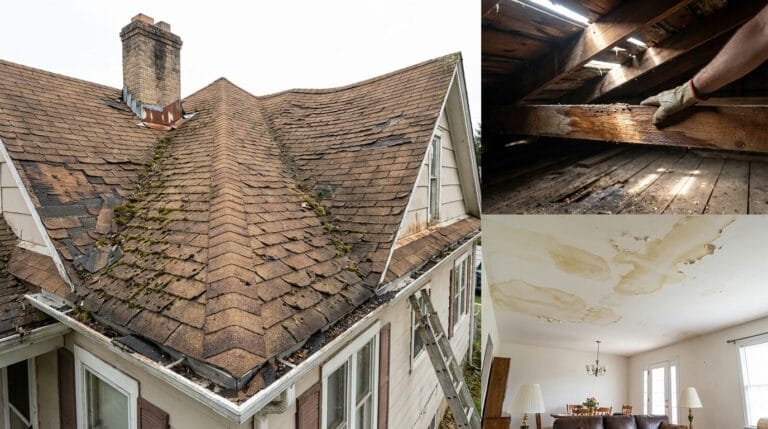

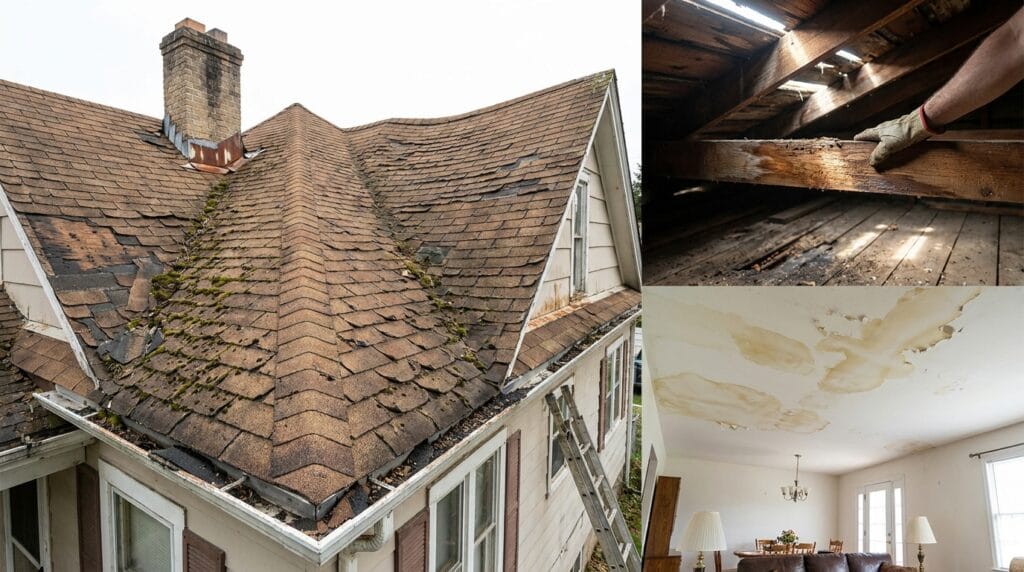
The clearest signs you need a new roof are curling or missing shingles, granules collecting in your gutters, water stains on your ceiling, daylight visible through your attic, a sagging roofline, and a roof that is 20 or more years old. If repair costs exceed 30 percent of a full replacement, or damage covers more than 25 percent of the roof surface, replacement is almost always the smarter financial call.
Most roofs do not fail overnight. They send signals for months before water hits your ceiling. Knowing what those signals look like, from outside, from inside, and from your attic, is the difference between a planned replacement and an expensive emergency. Here is everything you need to know.
Visual Signs You Can See from the Ground
You do not need to get on your roof to catch most warning signs. A slow walk around your home with binoculars tells you most of what you need to know. The following signs, spotted from the ground, are reliable indicators that your roof is approaching the end of its life.
Curling, cupping, and missing shingles
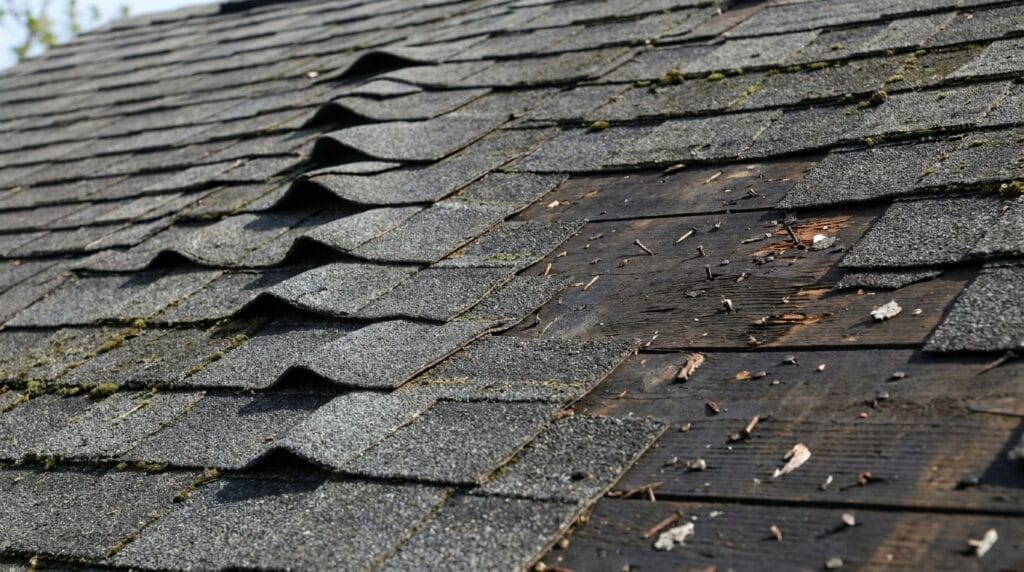
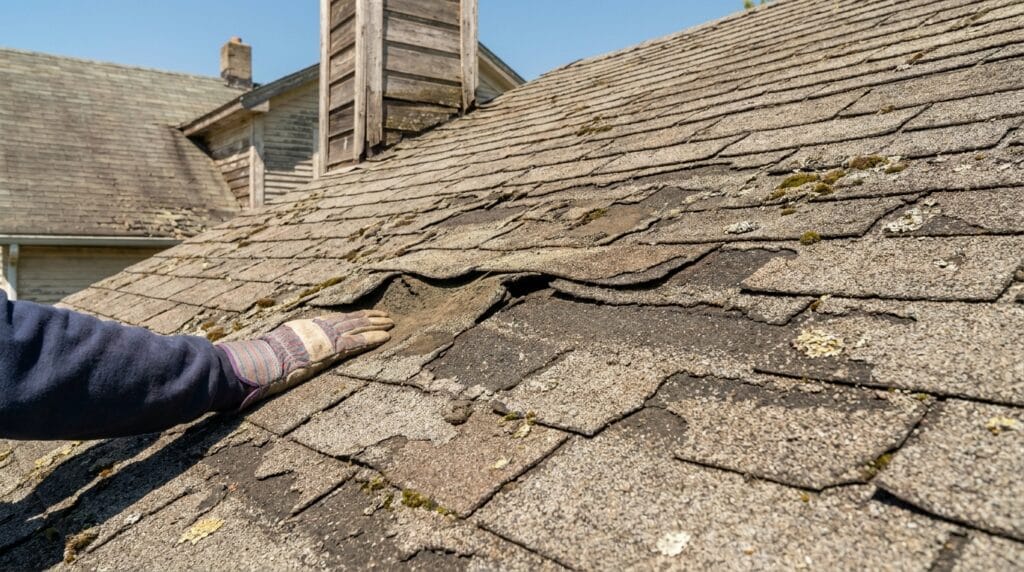
Curling, cupping, or missing shingles are among the most obvious signals. Healthy shingles lie flat. When edges curl upward or the middle buckles downward, the material has lost its flexibility and is in the final stages of its service life. Missing shingles expose the roof deck to UV and moisture every single day they go unaddressed.
Granules gutters
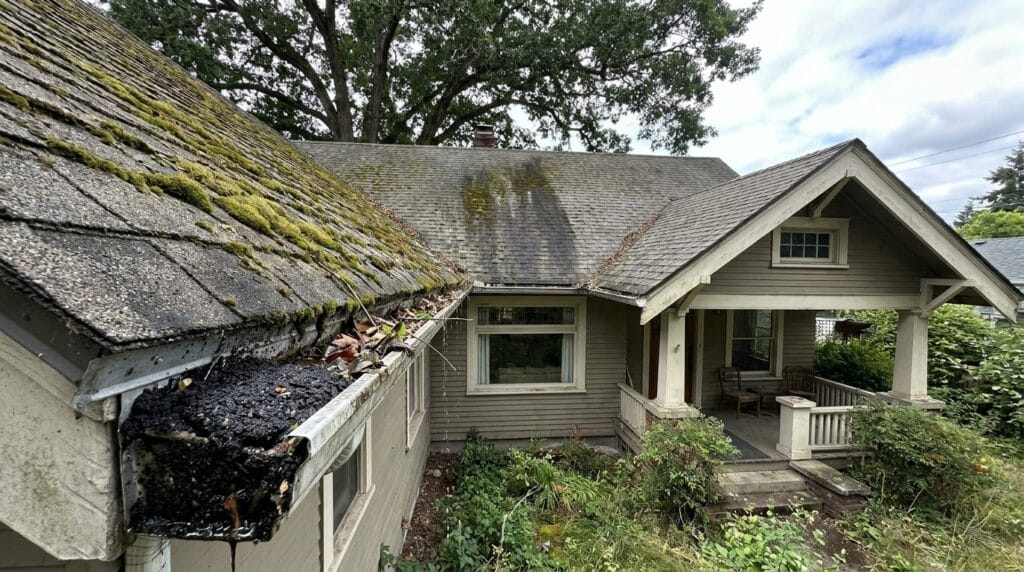
Granules in your gutters matter more than most homeowners realize. Asphalt shingles are coated with granules that protect the underlying material from UV breakdown. A small amount of shedding on a new roof is normal, but heavy and consistent granule buildup in gutters on an older roof means the protective layer is gone. Once granules are lost, shingles harden and crack quickly.
Moss, algae, or lichen growth
Moss, algae, or lichen growth is worth paying attention to beyond the cosmetic concern. Moss holds moisture against the shingles and forces its way underneath them over time. Lichen is more damaging because it bonds chemically to the shingle surface and roots into it. Widespread lichen on an older roof is a strong signal that replacement is near.
A sagging or wavy roofline
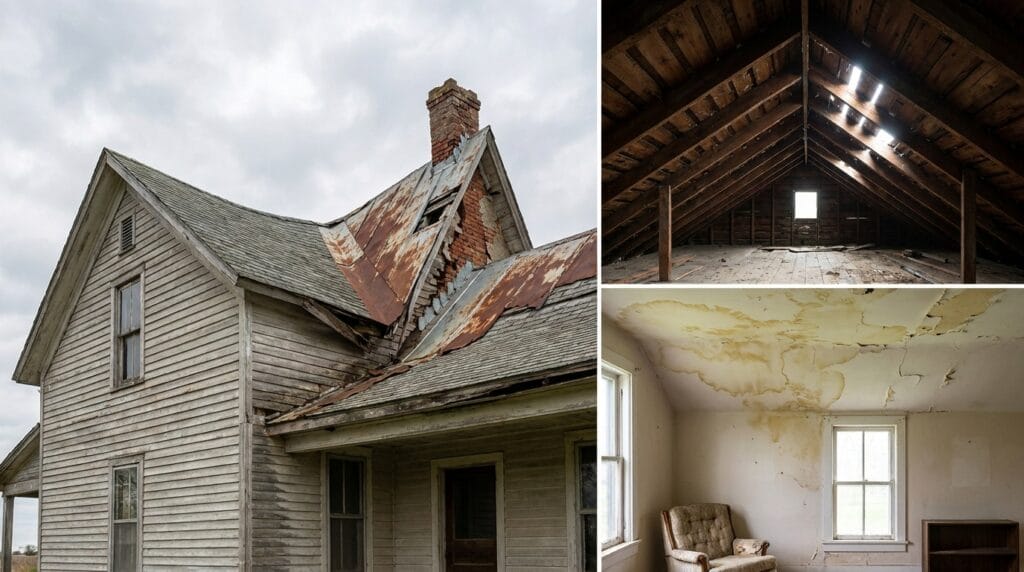
A sagging or wavy roofline is the most urgent exterior sign. Stand at the corner of your home and look down the ridge line. It should be straight and level. Any dipping or waves indicate that the structural supports underneath, decking, rafters, or trusses, have been compromised by moisture and rot. This is not something to monitor over time. It requires an immediate professional inspection.
Interior and Attic Warning Sign
Your attic is one of the best diagnostic tools available to you, and most homeowners never use it. A 10-minute inspection after a heavy rainstorm tells you more about your roof’s condition than anything visible from the street.
Look for these signs when you go up there:
- Water stains or dark discoloration on rafters and sheathing
- Daylight coming through the roof boards when all lights are off
- Insulation that looks matted, compressed, or discolored in patches
- Active dripping or wet spots during or immediately after rain
- A musty or earthy smell indicating mold has started developing
Water stains on your ceiling or upper walls are also direct evidence of infiltration. One critical thing to understand: the location of the stain inside your home almost never matches where water is actually entering the roof. Water travels along rafters before it drips, sometimes several feet from the actual breach. A ceiling stain does not just mean the roof is leaking, it means the leak has been happening long enough to saturate materials.
Age and Lifespan: How Old Is Too Old?
Age is the most reliable predictor of when a roof needs replacement, and it is the one most homeowners underestimate because an aging roof can look acceptable from the street even when it is approaching failure.
| Roofing Material | Average Lifespan | Primary Aging Factor |
|---|---|---|
| 3-Tab Asphalt Shingles | 15 to 20 years | Heat, UV, severe weather |
| Architectural Asphalt Shingles | 25 to 30 years | Hail, poor ventilation |
| Class 4 Impact-Resistant Shingles | 30 to 40 years | Best durability in hail regions |
| Metal Roofing | 40 to 70 years | Fastener corrosion if unmaintained |
| Concrete Tile | 40 to 60 years | Underlayment often fails before tile |
| Clay Tile | 50 to 100 years | Impact damage; underlayment lifespan |
| Wood Shakes | 25 to 35 years | Moisture, mold, fire risk |
| Slate | 75 to 150+ years | Nearly permanent if properly installed |
If a previous owner layered new shingles over an existing layer without a full tear-off, subtract five to eight years from these estimates. Layered roofs trap more heat, age faster, and hide underlying problems until they become serious.
Your climate also affects these timelines significantly. In hail-prone states like Texas, Colorado, and Oklahoma, asphalt shingle roofs routinely need replacement five to ten years earlier than their rated lifespan due to repeated impact damage. In the Northeast and upper Midwest, ice dams accelerate deterioration at the eaves. In the desert Southwest, extreme UV and heat cycling can shorten a shingle roof’s life by several years compared to moderate climates.
Repair or Replace? How to Make the Right Call
This is the question every homeowner wants answered, and the framework is straightforward once you understand the key thresholds.
Repair makes sense when:
- Damage is isolated and covers less than 25 percent of the total roof surface
- The roof still has eight or more realistic years of service life remaining
- The roof repair cost is well below 30 percent of full replacement cost
- The underlying decking is dry and structurally solid
Replacement is the smarter investment when:
- Your roof is within five years of its expected lifespan end
- Damage covers more than 25 percent of the surface
- You have had repairs on the same areas more than once
- Repair cost approaches 30 to 40 percent of replacement cost
- There is sagging, widespread decking damage, or structural compromise
The rule most roofing professionals use is this: if repairs cost 30 percent or more of what a new roof would cost, you are paying a significant amount to delay an inevitable expense rather than eliminate it. A new roof resets your timeline by 25 to 30 years. A repair on a deteriorating roof buys months to a few years at best, and the next failure is usually not far behind the one you just fixed.
How to Inspect Your Roof Without Getting On It
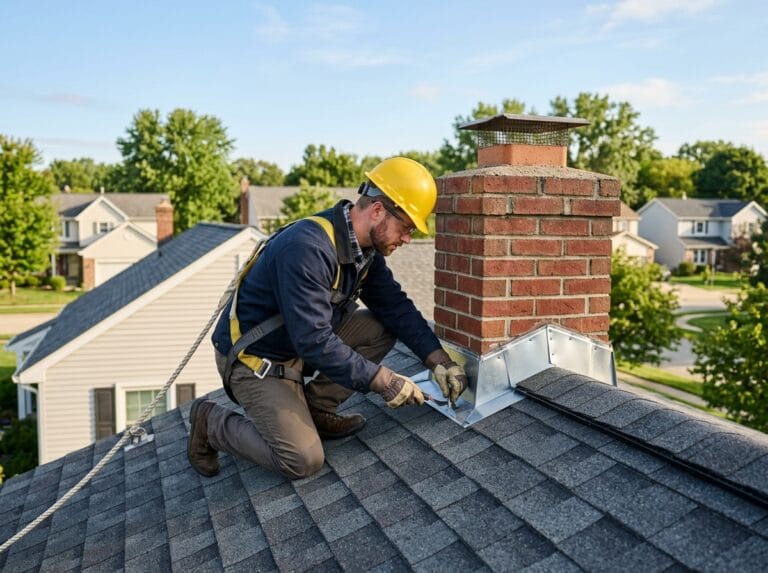
Walking an aging roof without proper equipment can actually cause additional shingle damage. You can get a useful inspection without ever leaving the ground or your attic.
From the ground:
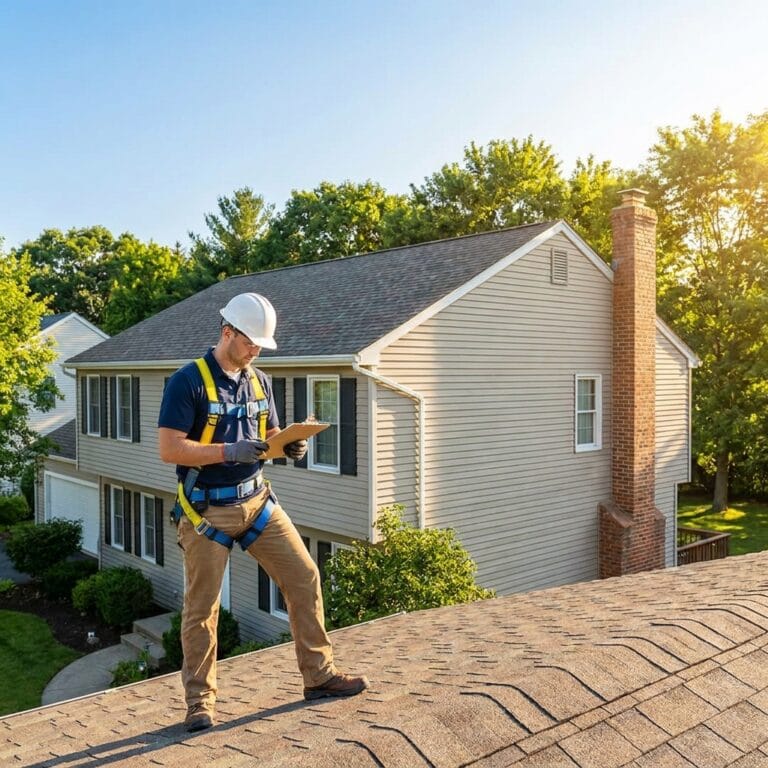
Walk the full perimeter of your home slowly and use binoculars or a zoom camera to examine the ridge, valleys, flashing points, and any areas where different roof planes meet. Do this after every significant storm, not just once a year.
From your attic:
On a sunny day, turn off all artificial light and look for pinholes or beams of daylight through the roof boards. Then use a flashlight to examine all rafters and sheathing for water staining, dark discoloration, soft spots, or mold. Check your insulation for matting or discoloration. Coming up during or immediately after heavy rain is the most effective way to catch active leaks in real time.
If you see sagging, widespread daylight, soft decking, or active dripping, call a licensed roofing contractor immediately. Most reputable companies offer free inspections, and getting a professional assessment early is almost always less expensive than waiting until the problem forces your hand.
Frequently Asked Questions
How do I know if I need a new roof or just repairs?
If damage is isolated and your roof has significant life remaining, a repair usually makes sense. If damage is widespread, the roof is near the end of its lifespan, or repair costs approach 30 percent of replacement cost, replacement is the better investment.
What does a roof look like when it needs replacing?
From outside: widespread curling or missing shingles, heavy granule loss, moss or lichen growth, and an uneven roofline. From inside: water stains, daylight through the roof boards, and compressed or stained attic insulation.
Can a roof last 30 years?
Yes. Architectural asphalt shingles are rated for 25 to 30 years. Quality installation, proper attic ventilation, and regular maintenance can get you to that upper range in moderate climates. In high-hail or extreme heat regions, expect the lower end of that window.
What happens if you wait too long to replace your roof?
Costs compound quickly. Water infiltration damages insulation, decking, framing, and interior drywall. What might have been a $12,000 roof replacement becomes a $20,000 project once interior remediation is added. There is almost no scenario where waiting saves money.
Does a new roof add value to a home?
Yes, consistently. A new roof delivers strong ROI at resale. More importantly, an aging or failing roof on a home inspection report is a dealbreaker for many buyers or a trigger for significant price reduction negotiations that typically exceed the cost of replacing the roof before listing.