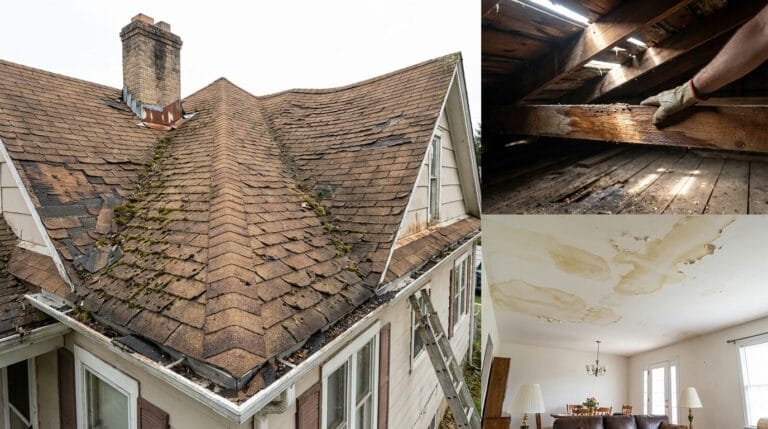

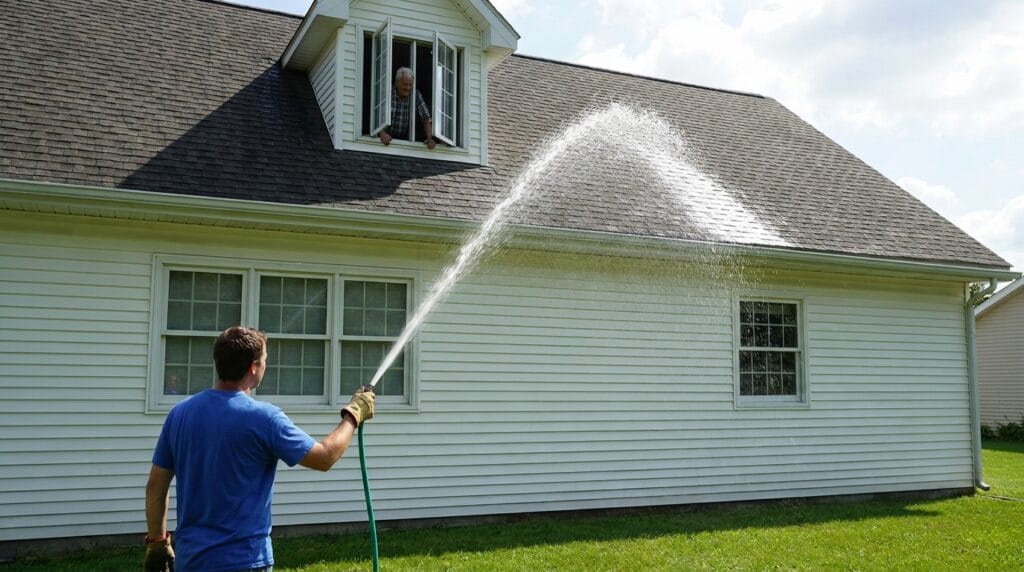
To detect a roof leak, start inside at the water stain, then check the attic with a flashlight and follow the wet trail up toward the roof peak. If you still can’t spot it, run a garden hose over the roof one section at a time while someone watches inside. The leak is almost never right above the stain, so the trick is tracing the water back to where it first gets in.
Signs You Have a Roof Leak
Most leaks show up inside long before you’d ever spot them on the roof. Watch for these:
- Brown or yellow water stains on the ceiling or walls
- Peeling paint or bubbling drywall
- A musty, damp smell in a room or the attic
- Mold or dark patches on the attic wood or insulation
- Dripping sounds during or after rain
- A stain that grows bigger after each storm
Outside, look from the ground for missing, cracked, or curled shingles, bent or rusted flashing, and debris piled up in the valleys. Two or more of these signs together usually means water is already getting in.
Why the Water Stain Isn’t the Leak
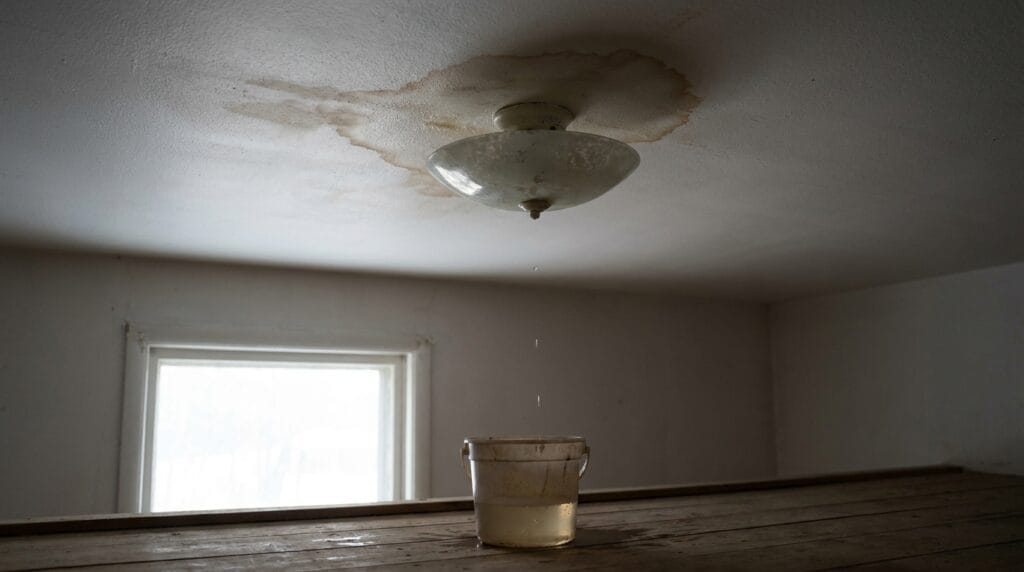
Here’s the part that trips everyone up. Water rarely drips straight down. Once it gets past the shingles, it runs along the decking, rafters, and insulation until it finds a low spot or a gap to fall through.
So the stain on your bedroom ceiling might be coming from a leak several feet away, or even in another room. Chasing the stain alone doesn’t work. You have to follow the water back to its entry point.
How to Detect Roof Leaks Step by Step
Work through these steps in order. Start indoors where it’s safe, and only go higher if you have to. Before you begin, grab a flashlight, a bucket, a garden hose, and a helper for the water test.
Step 1: Check Inside Your Home
Begin at the stain. Note where it is and how big it is. Trace the edge with a pencil so you can tell later if it’s still growing.
Then look around nearby light fixtures, vents, and corners where water likes to gather. Rule out anything directly below a bathroom or kitchen first, since plumbing can fake a roof leak.
Step 2: Inspect the Attic
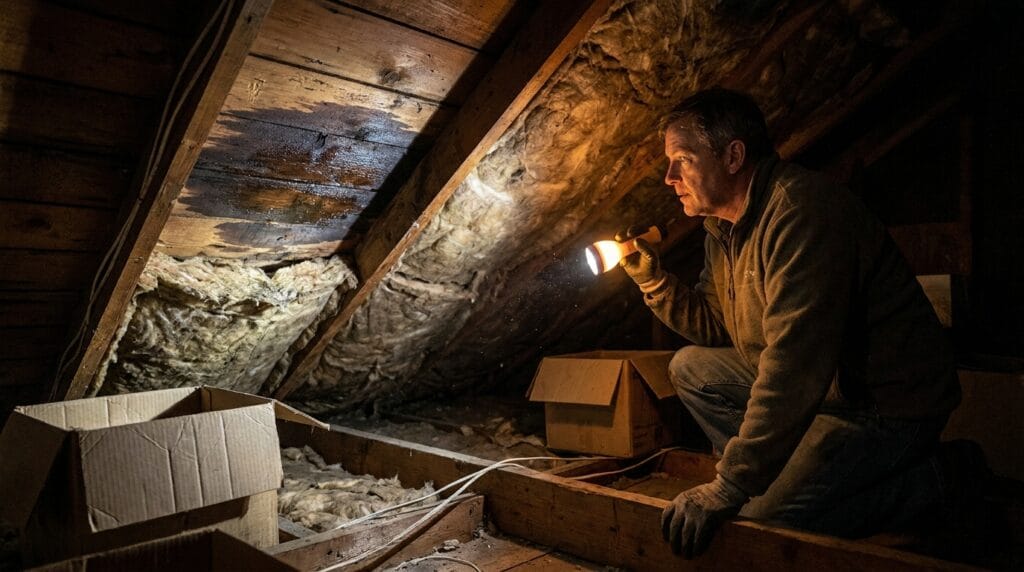
Head into the attic and step only on the joists so you don’t put a foot through the ceiling below.
Shine the light on the underside of the roof and look for dark, wet, or stained wood, damp or clumped insulation, and mold. Follow any water trail uphill toward the peak, because the real entry point is usually higher than where the water lands. Turn the lights off for a moment. If you see daylight coming through a gap, that gap is very likely your leak.
Step 3: Run a Hose (Water) Test
If it hasn’t rained and you still can’t find it, make your own rain. Have one person stay in the attic near the wet spot.
The other goes outside with a garden hose and soaks the roof one section at a time, starting low and working up. Spend a few minutes on each section. When the person inside sees water, you’ve found the area. Go slow, and don’t spray up under the shingles.
Step 4: Inspect the Roof From Outside
Once you know the rough area, look at the roof itself. If it isn’t safe to climb, use binoculars or your phone’s zoom from the ground or a stable ladder.
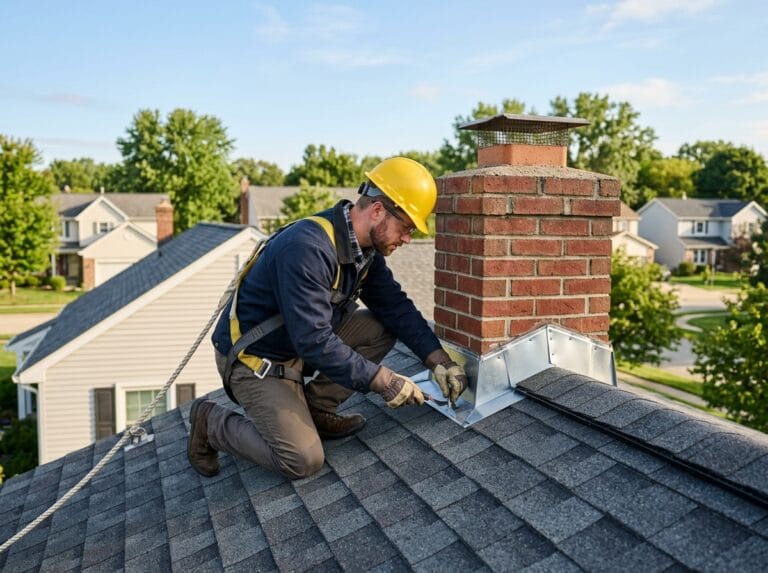
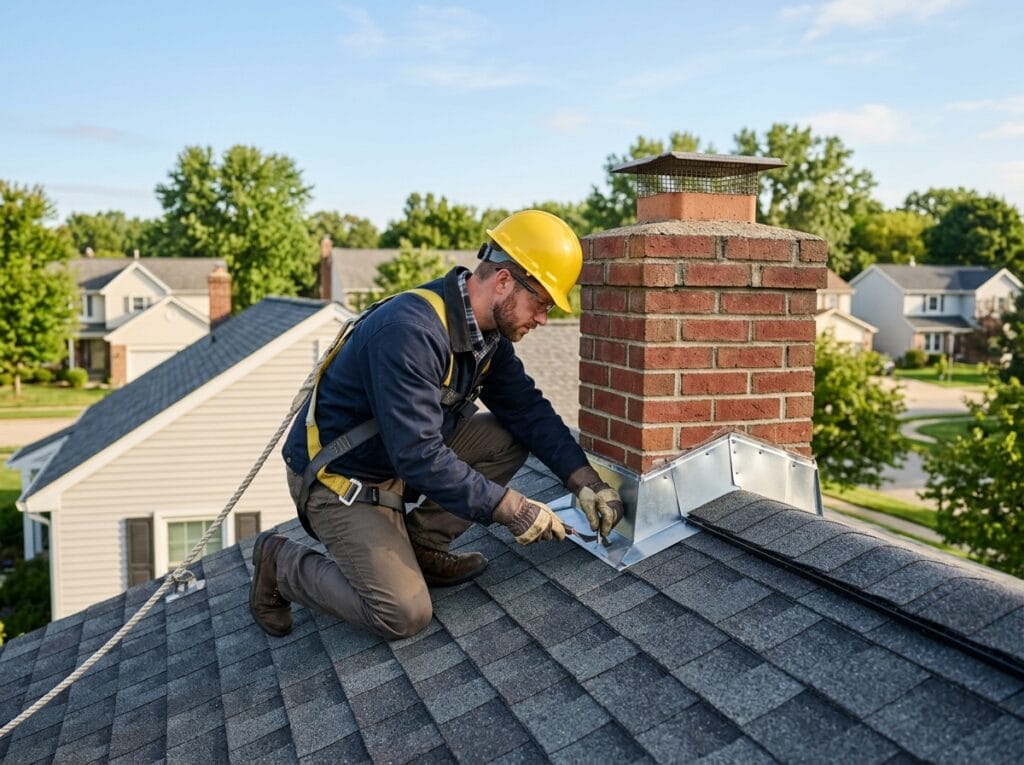
Check anything that pokes through the roof, since those spots leak the most. Look closely at the flashing around the chimney and vents, the pipe boots, skylights, valleys, and any loose or missing shingles.
Step 5: Mark the Source
When you find it, mark it so your roofer can go straight to it. If the leak is out in the open part of the roof, measure from the peak down and from the edge over, then transfer those numbers to the outside. A little chalk or tape saves a lot of guessing later.
Common Places Roofs Leak
Most leaks start at a weak point, not the middle of a solid shingle. Here’s where to look first:
| Leak spot | Why it leaks |
|---|---|
| Flashing (chimney, walls) | Cracks or pulls loose over time |
| Plumbing vent boots | Rubber seal dries out and splits |
| Skylights | Bad seals or worn flashing edges |
| Valleys | Water channels heavily and finds gaps |
| Missing/cracked shingles | Leaves the underlayment exposed |
| Old nail holes | Loose nails back out and let water in |
| Clogged gutters | Water backs up under the shingle edge |
Rule Out False Leaks
Not every wet ceiling is a roof leak. Before you blame the roof, check these:
- Condensation: Poor attic ventilation causes moisture, mold, and stains that look just like a leak.
- Plumbing: A pipe in the wall or ceiling above can drip down the same way.
- HVAC: A clogged AC drain line or sweating ductwork leaves water marks.
- Ice dams: In cold climates, melting snow refreezes at the edge and pushes water under the shingles.
If the wet spot shows up when it isn’t raining, it’s probably one of these, not the roof.
Professional Roof Leak Detection Methods
When a leak is buried or keeps coming back, the pros bring tools that see what you can’t. This is where roof leak detection gets exact instead of a guessing game.
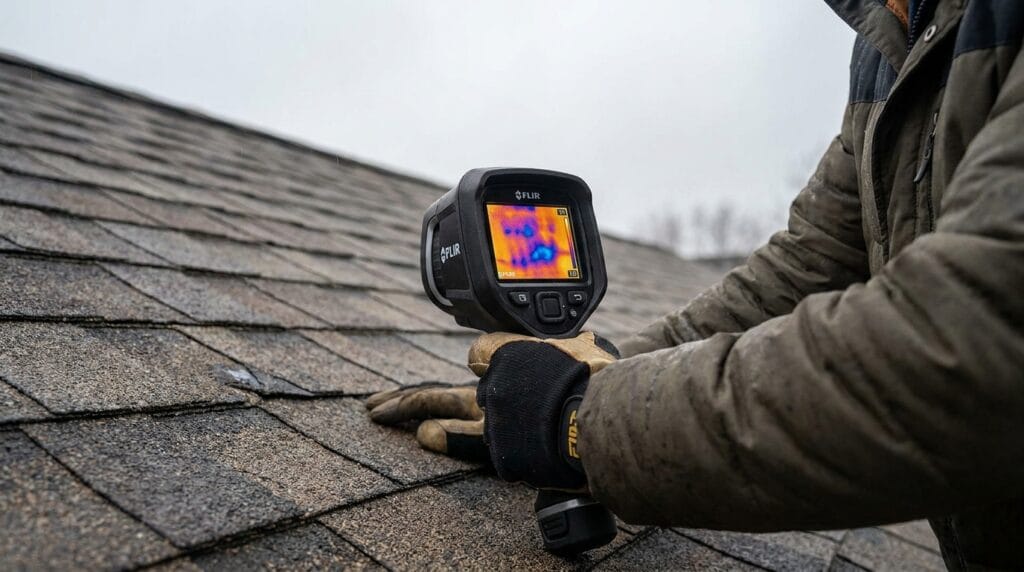
- Infrared thermal imaging: A thermal camera reads temperature. Wet insulation stays cooler than dry, so trapped water shows up on screen.
- Moisture meters: These read how wet the material is, pointing to water hiding behind a dry-looking surface.
- Electronic (spark) testing: For flat and low-slope roofs, a low-voltage signal traces water through the membrane to the exact breach.
- Trace gas and drones: A safe gas released under the roof escapes at the leak, and thermal drones scan big roofs in minutes.
The best part is these methods find the leak without tearing off shingles. Some companies specialize in this and only locate leaks, staying neutral so they don’t push a full replacement you don’t need. If you want a specialist, a non-invasive roof leak detection service can trace the water to the exact spot and hand you a report to give any roofer.
Commercial Roof Leak Detection
Flat and low-slope commercial roofs leak differently than homes. Water pools instead of running off, so a small seam gap or a failed membrane can soak a wide area before anyone notices inside.
For commercial roof leak detection, crews lean on moisture surveys, electronic testing, and thermal drones to scan large roofs fast with little disruption to the business below. Catching a soft, wet section early on a big roof saves a lot, since replacing a soaked deck costs far more than sealing one seam.
How to Catch Leaks Before They Cause Damage
The cheapest leak is the one you stop before it spreads. A few habits go a long way:
- Clean the gutters twice a year so water can’t back up under the edge.
- Trim tree branches that hang over or rub the roof.
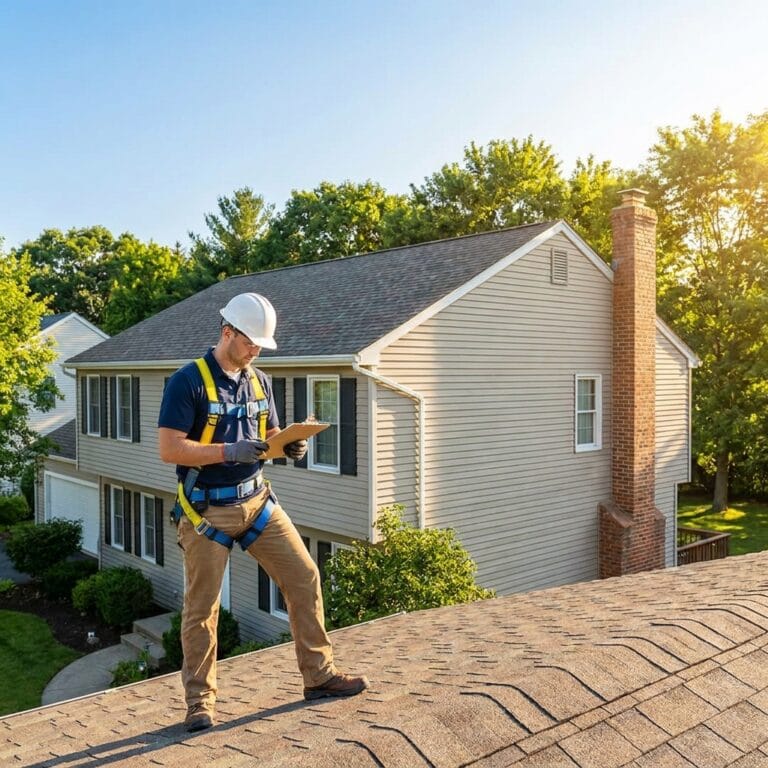
- Get the roof inspected once a year and after any big storm.
- Replace worn sealant and cracked flashing before they open up.
- Add smart water sensors in the attic. These cheap detectors sound an alert the moment they feel moisture, so you learn about a leak in hours, not weeks.
A yearly roof inspection is the simplest way to catch small problems while they’re still cheap to fix.
What to Do the Moment You Find a Leak
Act fast, because water damage only grows. First, protect your stuff: move furniture and rugs out of the way and put a bucket under the drip.
Take photos and notes of the leak and the damage. Those help a lot if you file a claim, since roof leaks from a storm may be covered. If it’s safe, cover the area with a tarp to slow the water until a roofer arrives. For anything past a quick patch, get a roof repair quote before the damage reaches the decking.
When to Call a Pro
Some leaks are simple. Many aren’t. If the roof is steep, the leak is hidden, or you’ve patched the same spot twice and it keeps coming back, it’s time for help.
A licensed roofer has the tools and the safety gear to find and fix it without the guesswork, and without you climbing around up top. If you’ve been searching for roof leak detection services near me, a local roofer who knows your area’s weather and roof types is your safest bet. Storm damage in particular should be checked by a pro, since the storm damage you can see is often just part of the problem.
FAQs
How do you detect a roof leak?
Start inside at the stain, check the attic with a flashlight, and follow the wet trail up toward the peak. If you can’t find it, run a garden hose over the roof section by section while a helper watches inside.
Why is my roof leak not where the stain is?
Water travels along the decking and rafters before it drips, so the stain can be several feet from the real entry point. You have to trace the water back uphill to find where it starts.
What’s the best tool to find a hidden roof leak?
Infrared thermal imaging is the most reliable for hidden moisture, since it spots the temperature difference of wet material. Moisture meters work well too and can be rented for home use.
Can I find a roof leak without going on the roof?
Yes. Most leaks can be traced from the attic and confirmed with a hose test, and you can inspect the outside with binoculars from the ground.
How much does professional roof leak detection cost?
Most home roof leak inspections run about $150 to $400, depending on the roof and method. Large or commercial roofs cost more when drones or electronic testing are needed.
How do I find roof leak detection near me?
Search for a local roofer or leak specialist that uses thermal imaging and moisture meters, not just a visual look. Local pros know your region’s common roof problems and weather.