
How Much Does Roof Repair Cost in 2026?
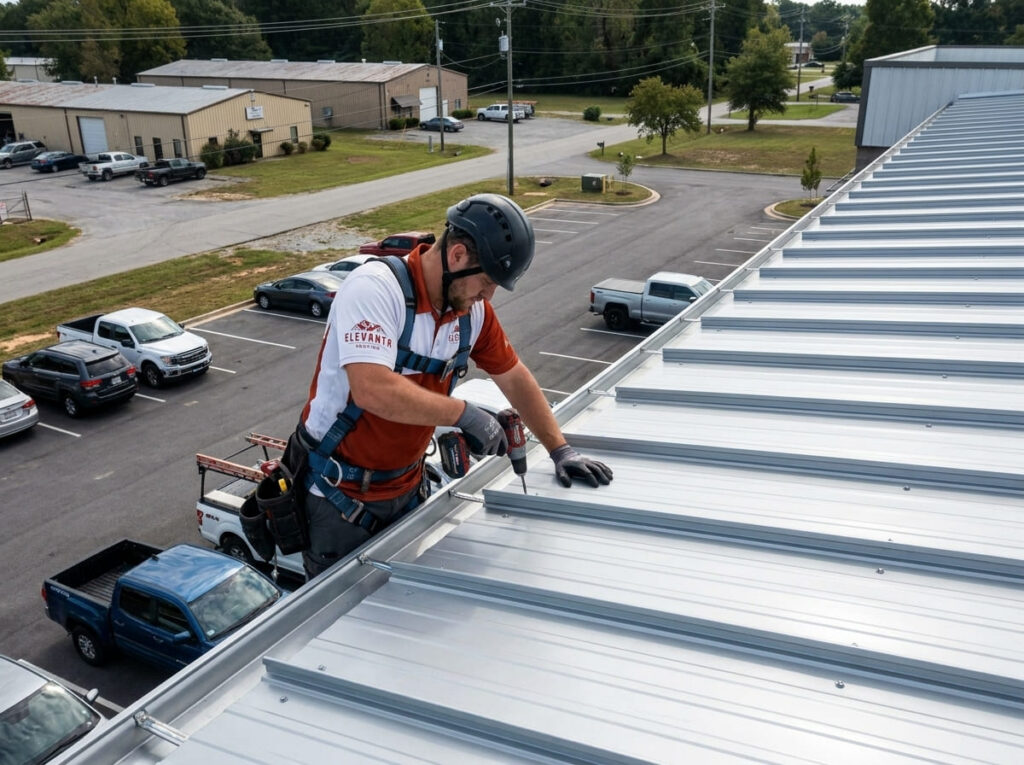
The average roof repair cost in 2026 runs between $150 and $8,000 for most US homeowners. Minor repairs like replacing a few shingles or patching a small leak cost $150 to $1,000. Moderate repairs including flashing replacement, valley work, or limited decking damage run $1,000 to $3,500. Major structural repairs like a sagging roof or extensive water damage climb to $3,500 to $8,000 or more. What you actually pay depends on the type of damage, your roofing material, your location, and how long you waited before calling someone. Every section below breaks down one of those factors with real 2026 numbers. Average Roof Repair Cost in 2026 Most homeowners land somewhere between $500 and $1,500 for a typical repair. But that range means nothing without understanding what level of damage you’re dealing with. Here’s the breakdown that actually helps you budget: Damage Level Cost Range What It Typically Involves Minor $150 to $1,000 1 to 5 shingles, isolated leak, pipe boot, small flashing gap Moderate $1,000 to $3,500 Multiple leaks, valley or chimney flashing, limited decking damage Major $3,500 to $8,000 Sagging roof, extensive water damage, large decking replacement Emergency Add $150 to $1,000 Same-day or after-hours response premium Replacement territory $8,000 and up When repair cost exceeds 40 to 50 percent of a new roof The biggest driver of cost isn’t the repair itself. It’s how long the damage has been active. A $400 shingle repair left alone through a winter becomes a $1,800 decking job. A slow leak ignored for two years becomes a $4,000 project with interior damage added on top. Every month you wait on a known roof problem, the bill grows. Roof Repair Cost by Type of Repair This is what most guides skim over. “Roof repair” covers fifteen completely different types of work, each with its own price range. Here’s what each one actually costs in 2026. Repair Type Typical Cost Range Roof leak repair $150 to $2,500 Shingle repair or replacement $150 to $900 Chimney or skylight flashing $200 to $1,200 Valley flashing $300 to $1,000 Sagging roof repair $800 to $7,000 Roof decking or sheathing $500 to $3,000 Ridge cap repair $250 to $750 Fascia and soffit $600 to $6,000 Roof vent or pipe boot $75 to $500 Hail damage repair $700 to $4,000 Storm and wind damage $200 to $5,000 Ice dam damage $500 to $3,000 Flat roof repair $200 to $2,500 Skylight repair $300 to $3,000 Emergency repair Standard cost plus $150 to $1,000 A few of these deserve more detail because homeowners consistently underestimate them. Roof leaks Roof leaks are the most common call, and the cost swings wildly based on one thing: how long the leak has been active. A fresh, localized leak from a failed boot or a blown shingle costs $150 to $750 to fix. A leak that has been quietly saturating insulation and wetting decking for months costs $800 to $2,500 or more because now you’re replacing structural material, not just patching the surface. Flashing failures Flashing failures cause more leaks than almost any other single issue. Every place where something meets your roof, chimney, skylight, dormer, wall, has flashing. When it corrodes, separates, or was installed incorrectly, water finds it fast. Chimney flashing repair runs $200 to $700. Skylight flashing runs $300 to $800. Valley flashing, where two roof planes meet and water concentrates, costs $300 to $1,000 depending on the valley length. Sagging roof repairs Sagging roof repairs are the most serious and most expensive item on that list. Sagging means the structure beneath the surface, the decking, rafters, or trusses, has been compromised. If it’s limited decking over solid rafters, you might get away with $800 to $2,500. If the rafters or trusses themselves are damaged, structural repair by a licensed contractor runs $2,500 to $7,000 before the roofing material goes back on top. Ice dam damage Ice dam damage is a regional issue that catches northern homeowners off guard because the damage often shows up inside the house weeks after the actual event. Fixing the immediate damage runs $500 to $3,000. Fixing the underlying cause, which is almost always attic insulation and ventilation deficiency, adds another $1,500 to $4,000 but prevents the same problem from recurring every winter. Roof Repair Cost by Material Your roofing material affects both the cost of the parts and the cost of the labor. Premium, specialized, or discontinued materials require more skilled contractors and more sourcing effort. Here’s the 2026 breakdown: Roofing Material Minor Repair Moderate Repair Key Reason for Cost Difference 3-Tab Asphalt $150 to $400 $400 to $1,200 Most affordable and widely available Architectural Asphalt $200 to $500 $500 to $1,500 Slight material premium; matching harder on older roofs Class 4 Impact-Resistant $300 to $700 $700 to $2,000 Premium product; limited availability in some markets Corrugated Metal $300 to $700 $700 to $2,000 Panel replacement common; fastener complexity Standing Seam Metal $500 to $1,200 $1,200 to $3,500 Specialized installer required; hidden fastener system Concrete Tile $400 to $900 $900 to $2,800 Tile sourcing; heavy; underlayment often replaced too Clay Tile $500 to $1,200 $1,200 to $3,500 Specialty matching; fragile to work around Wood Shakes $400 to $1,000 $1,000 to $2,500 Fire treatment requirements; moisture treatment Slate $400 to $1,200 $1,200 to $4,000 Rare specialists; natural stone matching; slow labor EPDM or TPO Flat Roof $200 to $700 $700 to $2,500 Membrane specialists only; bonding or welding required One thing worth flagging: any material older than ten years can be difficult to match. Manufacturers discontinue colors and update formulations regularly. If your roof is older, get confirmation from the contractor that matching material is available before the job starts. In some cases, homeowners choose to repair a larger section than the damage requires just to avoid a visible patchwork result. Roof Repair Cost by State in 2026 Nobody covers this, and it matters. The same moderate roof repair, say chimney flashing and a small leak, can cost $800 in Arizona, $1,100 to $2,600 for
How Much Does It Cost to Replace a Roof in 2026?
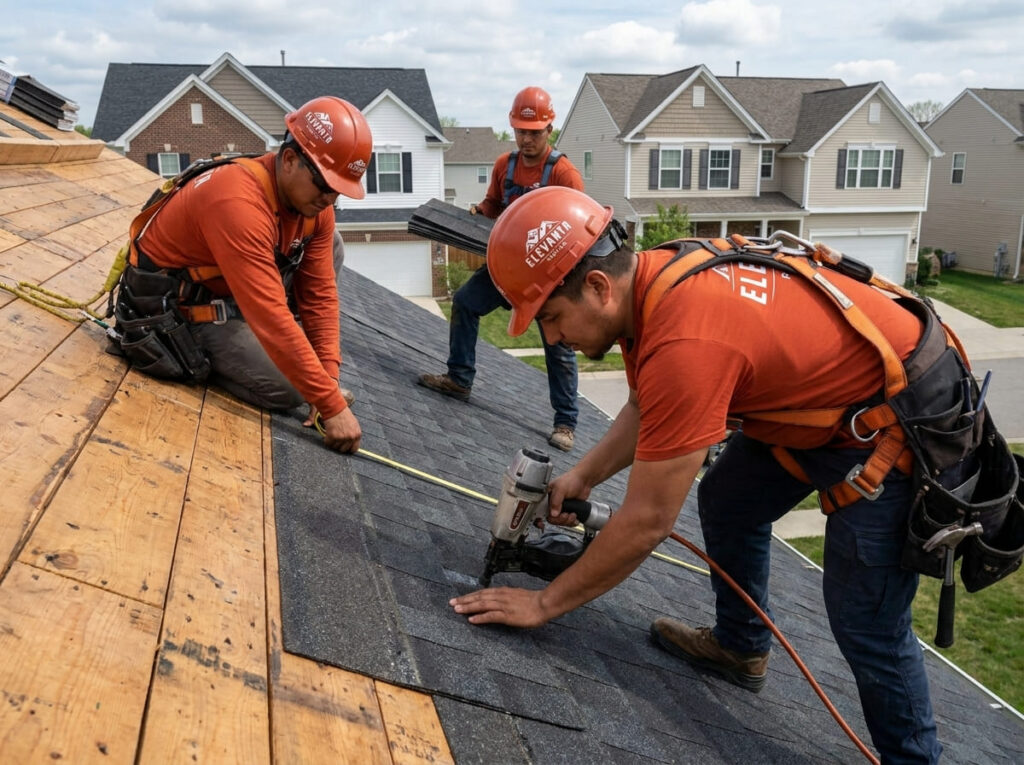
In 2026, the average roof replacement cost in the US ranges from $5,800 to $19,800, with most homeowners spending around $9,500 to $11,500 for a standard asphalt shingle roof on a 2,000 sq ft home. Your final cost depends on roof size, material type, labor rates in your area, roof pitch, and whether your decking needs repairs. Replacing a roof is one of those home improvement projects that most homeowners dread, not because it’s complicated to understand, but because the price tag can feel overwhelming when you don’t know what to expect. You search online, get three different numbers from three different websites, and walk away more confused than when you started. This guide is different. We’re going to break down every single factor that affects your roof replacement cost in 2026, materials, labor, location, insurance, financing, so that by the time you finish reading, you’ll know exactly what a fair price looks like, what to ask your contractor, and how to avoid paying more than you should. What Is the Average Roof Replacement Cost in 2026? Let’s start with the numbers you actually came here for. Nationally, the average roof replacement cost in 2026 sits around $9,500 to $11,000 for a typical single-family home. But that “average” can be misleading because roofs vary so dramatically in size, shape, and material. A small ranch home in the Midwest with a simple gable roof and asphalt shingles might come in at $6,500. A two-story craftsman in the Pacific Northwest with a steep pitch, multiple dormers, and metal roofing could easily hit $35,000 or more. Here’s a broad snapshot to set your expectations: Cost Tier Price Range What It Usually Means Low end $5,800 – $8,000 Small roof, basic 3-tab asphalt shingles, simple pitch, low labor market Average $9,000 – $13,000 Mid-size home, architectural shingles, standard complexity High end $15,000 – $30,000 Large roof, premium materials, steep pitch, complex design Premium $30,000 – $70,000+ Slate, copper, or clay tile on large or complex roofs The reason you’ll see such a wide range across websites is that roof replacement cost is genuinely not a one-size-fits-all number. It’s more like a formula: your roof’s square footage × material cost per square foot + labor + additional components + local market rates. Once you understand each piece of that formula, the estimate you get from a contractor will actually make sense, and you’ll be able to tell immediately if someone is overcharging you. Roof Replacement Cost by Roof Size Of all the factors that affect your final bill, roof size is the most straightforward. Roofers price their work by the “square” one roofing square equals 100 square feet of roof surface area. So a 2,000 sq ft roof is 20 squares. One thing that trips up a lot of homeowners: your roof’s square footage is almost always larger than your home’s floor plan. Why? Because the slope adds surface area. A 2,000 sq ft home might have 2,200 to 2,800 sq ft of actual roof surface depending on how steep and how complex the roofline is. Here’s what you can generally expect to pay based on your roof’s square footage using standard architectural asphalt shingles: Roof Size (Sq Ft) Estimated Cost (Low) Estimated Cost (Average) Estimated Cost (High) 1,000 sq ft $4,000 $7,000 $10,500 1,500 sq ft $6,000 $10,500 $16,000 2,000 sq ft $8,000 $13,500 $21,000 2,500 sq ft $10,000 $16,500 $26,000 3,000 sq ft $12,000 $20,000 $31,000 3,500 sq ft $14,000 $23,500 $36,500 These ranges assume a full tear-off of the old roof, standard synthetic underlayment, and quality architectural shingles. Premium materials or a complex roof design will push you toward the high end, sometimes beyond it. Roof Replacement Cost by Material (2026 Pricing) Your choice of roofing material is the second biggest cost driver after roof size, and it’s also where you have the most control. Different materials come with dramatically different price points, lifespans, and long-term value. Here’s a complete breakdown of every major roofing material and what you’ll pay in 2026. Asphalt Shingles Asphalt shingles are the most popular roofing material in the US by a wide margin, and for good reason. They’re affordable, widely available, and easy for most contractors to install. They come in three main tiers: 3-Tab Asphalt Shingles: The most budget-friendly option. Flat and uniform in appearance, 3-tab shingles have a shorter lifespan and less wind resistance than architectural options. They’re becoming less common as more homeowners opt for the upgrade. Architectural (Dimensional) Shingles: The most popular choice nationwide. Thicker and more dimensional than 3-tab, architectural shingles look better, last longer, and handle wind better. Most contractors include these in their standard quotes. Premium Architectural Shingles: Designer-level asphalt shingles that mimic the look of slate, wood shake, or tile. They carry longer warranties and better performance ratings. Class 4 Impact-Resistant Shingles: These are engineered specifically to withstand hail, up to 2 inches in diameter in some cases. They carry the highest impact rating available and are increasingly popular in hail-prone states like Texas, Colorado, Oklahoma, and Kansas. Many insurance carriers offer premium discounts of 10 to 30 percent when you install Class 4 shingles, which can offset the higher upfront cost within just a few years. Metal Roofing Metal roofing has grown significantly in popularity over the last decade, and it’s not hard to understand why. A metal roof can last two to three times as long as asphalt shingles, reflects solar heat to reduce cooling costs, and requires almost no maintenance. The trade-off is a higher upfront investment. Corrugated Metal / Metal Panels: The most affordable metal option. Common on barns and agricultural buildings historically, but increasingly used on modern homes with an industrial or contemporary aesthetic. Metal Shingles: Designed to look like traditional shingles or slate while delivering metal’s durability benefits. A good middle ground between appearance and performance. Standing Seam Metal: The premium end of metal roofing. Hidden fasteners, continuous panels running from ridge to eave, and exceptional weather tightness make this the